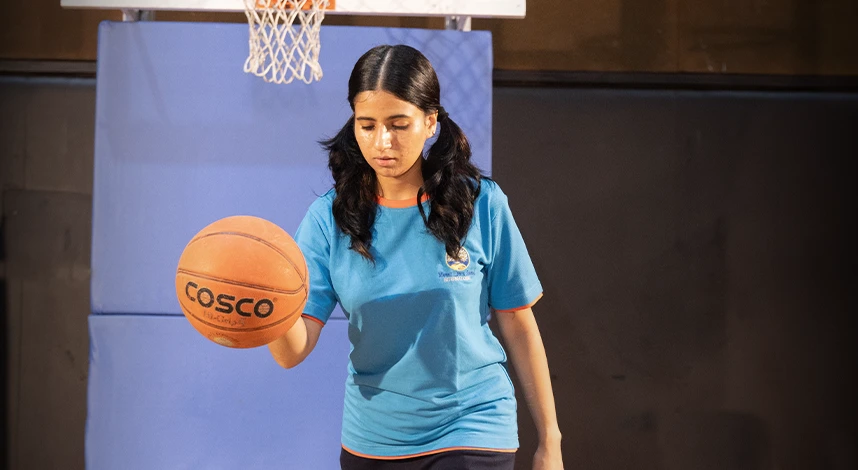
Extracurricular Activities in Schools: IB vs Regular Programmes

Blog25 April 20266 min read

When parents explore school options, extracurricular activities often appear similar on the surface-sports, music, art, clubs. However, in an International Baccalaureate (IB) school, these experiences go far beyond being “add-ons” to academics.


In IB education, extracurricular activities are deeply integrated into the learning journey, shaping not just skills, but character, purpose, and global awareness.


So, what really sets them apart?


Extracurriculars vs. Co-curriculars: A Shift in Mindset


In many traditional school systems, extracurricular activities are:

  • Optional
  • Skill-based (e.g., sports, music, dance)
  • Focused on competition or performance


In IB schools, these are often viewed as co-curricular experiences, meaning they are:

  • An essential part of holistic development
  • Connected to classroom learning
  • Focused on personal growth, reflection, and impact


What Do Activities in IB Schools Actually Look Like?


1. Purpose-Driven, Not Just Participation-Based

In IB programmes-especially the Diploma Programme (DP) and Career-related Programme (CP)- students engage in structured experiences like CAS (Creativity, Activity, Service).


Instead of simply “joining a club,” students:


  • Set personal goals
  • Reflect on their experiences
  • Demonstrate growth over time


Example:
A student participating in a music activity may not just perform, but also organize a community concert or mentor younger students.


2. Real-World Connections and Impact

IB activities often extend beyond the school campus.


Students might:

  • Lead environmental initiatives
  • Volunteer with community organizations
  • Work on social impact projects


This helps them understand their role as responsible global citizens.


Example:
Students conduct a waste audit within the school, Design an awareness campaign for peers and parents, Introduce simple changes like reducing single-use plastics and encouraging reusable materials


3. Student Agency and Leadership

In IB schools, students are not just participants-they are leaders.


They:

  • Initiate clubs and projects
  • Take ownership of planning and execution
  • Make decisions and solve real challenges


This builds confidence, independence, and leadership skills.


Example:

Students from the Rotaract /Interact Club identify a community need and organize a donation and awareness drive. They plan logistics, coordinate with stakeholders, and lead the initiative end-to-end-demonstrating true leadership and social responsibility.


4. Reflection is a Key Component

A unique feature of IB extracurriculars is reflection.


Students regularly think about:

  • What they learned
  • Challenges they faced
  • How they have grown


This transforms activities into meaningful learning experiences rather than routine participation.


5. Balance is Actively Encouraged

IB emphasizes the importance of balance-academics, physical activity, creativity, and wellbeing.


Students are encouraged to:

  • Explore diverse interests
  • Manage time effectively
  • Maintain a healthy lifestyle


How Is This Different from Regular Programmes?


Traditional Programmes

IB Approach

Activity-focused

Purpose-driven learning

Teacher-led

Student-led and initiated

Limited reflection

Continuous reflection

Skill development

Skill + character development

Often competitive

Growth and impact-oriented


Why This Matters for Your Child


Through this approach, students develop:

  • Confidence and leadership
  • Empathy and social responsibility
  • Time management and resilience
  • A sense of purpose and initiative


These are lifelong skills that go far beyond school achievements.


A Holistic Approach to Education


In an IB school, extracurricular activities are not separate from learning-they are an extension of it.

They ensure that students don’t just excel academically, but also grow into well-rounded, thoughtful, and engaged individuals ready to make a difference.


FAQs

QueWhat is the difference between extracurricular and co-curricular activities in IB schools?

Ans: In IB schools, extracurricular activities sit outside the formal academic timetable and are typically optional — sports teams, music ensembles, debate clubs, and similar student-led or school-organised pursuits. Co-curricular activities are integrated more deliberately with the school's educational programme and learning goals, treated as extensions of the curriculum rather than additions to it. In the IB context, activities linked to the Learner Profile, Approaches to Learning, or the CAS framework are often considered co-curricular because they directly serve the programme's educational outcomes. The distinction matters because IB schools design activities not just for enrichment but as genuine vehicles for developing the Learner Profile attributes — curiosity, care, balance, and risk-taking — making them a core part of an IB student's formation rather than optional extras.


Que: How are extracurricular activities different in IB schools compared to regular schools?  

Ans: In most traditional schools, extracurricular activities are supplementary — enjoyable additions to schoolwork with no formal connection to academic goals. In IB schools, activities are intentionally embedded within the educational philosophy. For PYP and MYP students, activities are linked to the Learner Profile and Approaches to Learning, meaning students are explicitly guided to reflect on what they discover, how they collaborate, and what skills they develop through participation. For DP students, extracurricular activities form part of CAS — a mandatory, reflective component of the Diploma — which means students must document, evidence, and reflect on their experiences as part of their qualification. This transforms the nature of participation: a student joining a photography club at an IB school is not just pursuing a hobby; they are developing as a communicator, creative thinker, and risk-taker, and reflecting on that growth as part of their education.


QueWhat is CAS in IB and how does it relate to extracurricular activities?

Ans: CAS stands for Creativity, Activity, Service. It is a mandatory core component of the IB Diploma Programme, running alongside academics throughout the two-year DP. Creativity covers arts and experiences involving creative thinking — music, drama, design, writing, or any process where students express and extend ideas imaginatively. Activity covers physical exertion contributing to a healthy lifestyle — sports, dance, yoga, or any sustained physical pursuit. Service involves unpaid, voluntary engagement with the community that has a genuine learning benefit — tutoring peers, working with an NGO, or running an environmental initiative.


CAS is not formally graded, but students must satisfactorily complete it — including one substantial CAS project lasting at least one month — to be eligible for the IB Diploma. Students document and reflect on their CAS experiences in a portfolio or journal. Many extracurricular activities that students already do naturally count toward CAS, provided they are sustained, meaningful, and generate evidence of personal growth and achievement of the seven CAS learning outcomes.


References & Further Reading

  • International Baccalaureate – Creativity, Activity, Service (CAS)
    https://www.ibo.org/programmes/diploma-programme/curriculum/core/cas/
  • International Baccalaureate – What is an IB Education?
    https://www.ibo.org/programmes/about-ib-education/
  • International Baccalaureate – IB Learner Profile
    https://www.ibo.org/benefits/learner-profile/

Let Your Child's Journey Begin at MLSI

Join one of the top IB schools in Mumbai. Experience world-class education that shapes global citizens.

Contact Us