IBDP Syllabus 6 Subject Groups and Core Components Explained

Blog22 April 20266 min read

A guide for students and parents at Mount Litera School International


The International Baccalaureate Diploma Programme (IBDP) is one of the world's most respected pre-university qualifications. It goes far beyond rote learning, asking students to think critically, collaborate across disciplines, and engage meaningfully with global ideas. At Mount Litera School International, we are proud to offer the full breadth of the IBDP curriculum — including an exceptionally wide range of Science subjects — giving our students the flexibility to follow their passions and build the academic profiles that top universities are looking for.


Here is your complete guide to how the Diploma Programme is structured.


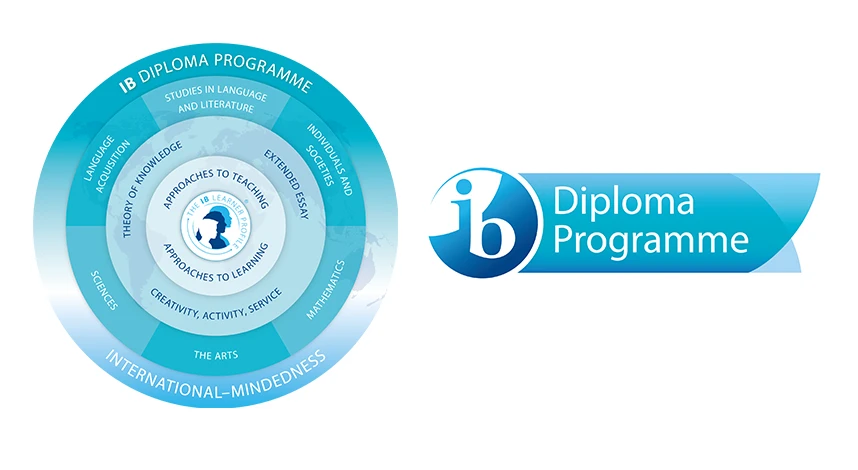
How the IBDP Works

Students study six subjects — one from each group — alongside three compulsory core components. Three subjects are studied at Higher Level (HL) and three at Standard Level (SL). HL subjects involve approximately 240 teaching hours and allow students to go into significantly greater depth, while SL subjects involve around 150 hours and ensure genuine breadth across all disciplines. Students typically choose HL subjects in the areas most relevant to their university aspirations. DP students have the flexibility to opt out of a Group 6 subject and instead choose their sixth subject from either Group 3 or Group 4.


The 6 Subject Groups


Group 1 — Studies in Language and Literature

Students study their strongest language through literature, media, and non-literary texts. This group develops critical reading, analytical writing, and personal response, helping students become confident, articulate communicators.


Group 2 — Language Acquisition

Students develop proficiency in a second language alongside intercultural understanding. Options are tailored to prior experience — ab initio courses are designed for beginners, while Language B courses suit students with prior exposure. At Mount Litera School International, the language acquisition programme supports students in becoming genuine global communicators. Students can choose their Group 2 subject from Hindi, Spanish, or French.


Group 3 — Individuals and Societies

This group develops students' understanding of the human world through social, economic, historical, and cultural lenses. Subjects include Business Management, Economics, Environmental systems and societies, and Psychology, among others. Students learn to evaluate evidence, construct arguments, and engage with real-world issues at both local and global levels.
 

Group 4 — Sciences

This is where Mount Litera School International truly stands apart. Rather than limiting students to the traditional trio of Physics, Chemistry, and Biology, we offer an exceptionally broad range of Science subjects — enabling every student to pursue science in a way that aligns with their interests and university goals.


Our Science offering includes Physics, Chemistry, Biology, Environmental Systems and Societies (ESS), Sports Exercise and Health Science (SEHS), Design Technology, and Computer Science.


Environmental Systems and Societies explores ecology, sustainability, and the relationship between human society and the natural world — ideal for students interested in environmental science, policy, or conservation. Sports Exercise and Health Science examines the science of the human body in motion, making it a natural pathway for students heading into medicine, physiotherapy, or sports science. Design Technology bridges science, engineering, and creativity through the design cycle and materials innovation, while Computer Science covers algorithms, programming, data structures, and the societal impact of technology — essential preparation for students pursuing careers in tech, AI, or software development.


This breadth of choice means that whether a student is drawn to the life sciences, the physical sciences, human performance, the environment, or technology, there is a rigorous and relevant pathway waiting for them at Mount Litera School International.


Group 5 — Mathematics

Mathematics develops the logical reasoning and quantitative skills essential for nearly every field of higher education. Students choose between two courses based on their background and goals. Mathematics: Analysis and Approaches suits students who enjoy abstract mathematical thinking, while Mathematics: Applications and Interpretation is designed for those who prefer mathematics in real-world and practical contexts.


Group 6 — The Arts

Group 6 gives students the opportunity to explore the arts — including Visual Arts — in a rigorous and reflective way. Students who wish to pursue a second science or an additional subject from Groups 1 to 5 may opt to do so instead of an Arts subject, a common choice for students following STEM pathways.


The 3 Core Components

What makes the IBDP truly distinctive is its core — three compulsory elements that develop intellectual rigour, self-awareness, and real-world engagement in ways that subject study alone cannot.


  • Theory of Knowledge (TOK) is a philosophical course that asks students how we know what we know. Examining knowledge across disciplines, it develops critical thinking and intellectual humility, encouraging students to question assumptions and make connections across their learning.


  • The Extended Essay (EE) is a 4,000-word independent research essay on a topic of the student's choosing. It develops the research, analysis, and academic writing skills that universities expect, and gives students a genuine taste of independent scholarly enquiry.


  • Creativity, Activity, Service (CAS) requires students to engage in real-world projects involving creative endeavour, physical activity, and community service. CAS ensures that the Diploma produces not just strong academics, but thoughtful, active, and socially engaged citizens.


Together, TOK and the Extended Essay can contribute up to 3 bonus points to a student's final score — meaning the core is not simply an obligation, but a genuine academic opportunity.


Why Universities Value the IBDP

The IBDP is recognised and respected by universities in over 100 countries. Its rigour, breadth, and emphasis on independent thinking prepare students not just to gain university entry, but to thrive once they arrive. At Mount Litera School International, our students graduate as confident, curious, and capable learners — ready to make their mark at the world's leading institutions and beyond.


Reference:

  1. International Baccalaureate Organization. Diploma Programme — Overview. International Baccalaureate, www.ibo.org/programmes/diploma-programme/. Accessed April 2026.

  2. International Baccalaureate Organization. What is the DP? International Baccalaureate, www.ibo.org/programmes/diploma-programme/what-is-the-dp/. Accessed April 2026.

  3. International Baccalaureate Organization. DP Curriculum — Subject Groups. International Baccalaureate, www.ibo.org/programmes/diploma-programme/curriculum/. Accessed April 2026.

  4. International Baccalaureate Organization. Theory of Knowledge (TOK). International Baccalaureate, www.ibo.org/programmes/diploma-programme/curriculum/theory-of-knowledge/. Accessed April 2026.

  5. International Baccalaureate Organization. Extended Essay. International Baccalaureate, www.ibo.org/programmes/diploma-programme/curriculum/extended-essay/. Accessed April 2026.

  6. International Baccalaureate Organization. Creativity, Activity, Service (CAS). International Baccalaureate, www.ibo.org/programmes/diploma-programme/curriculum/creativity-activity-service/. Accessed April 2026.

  7. International Baccalaureate Organization. DP Assessment Principles and Practices. International Baccalaureate, www.ibo.org/programmes/diploma-programme/assessment-and-exams/. Accessed April 2026.

Let Your Child's Journey Begin at MLSI

Join one of the top IB schools in Mumbai. Experience world-class education that shapes global citizens.

Contact Us