FAQs
For 2-year-olds, playgroup provides opportunities to explore new materials, hear language beyond familiar home routines, interact with other children and practise simple self-help skills. Through songs, stories, movement and sensory play, toddlers can develop coordination, communication and confidence in a new environment. A gradual transition and responsive caregivers can help make the experience more comfortable.
Yes, playgroup can provide valuable opportunities for 3-year-olds to practise communication, cooperative play, problem-solving and independence before moving into preschool or nursery. Group activities help children experience routines, take turns and express their ideas with peers. The right setting should match the child's developmental needs, temperament and readiness.
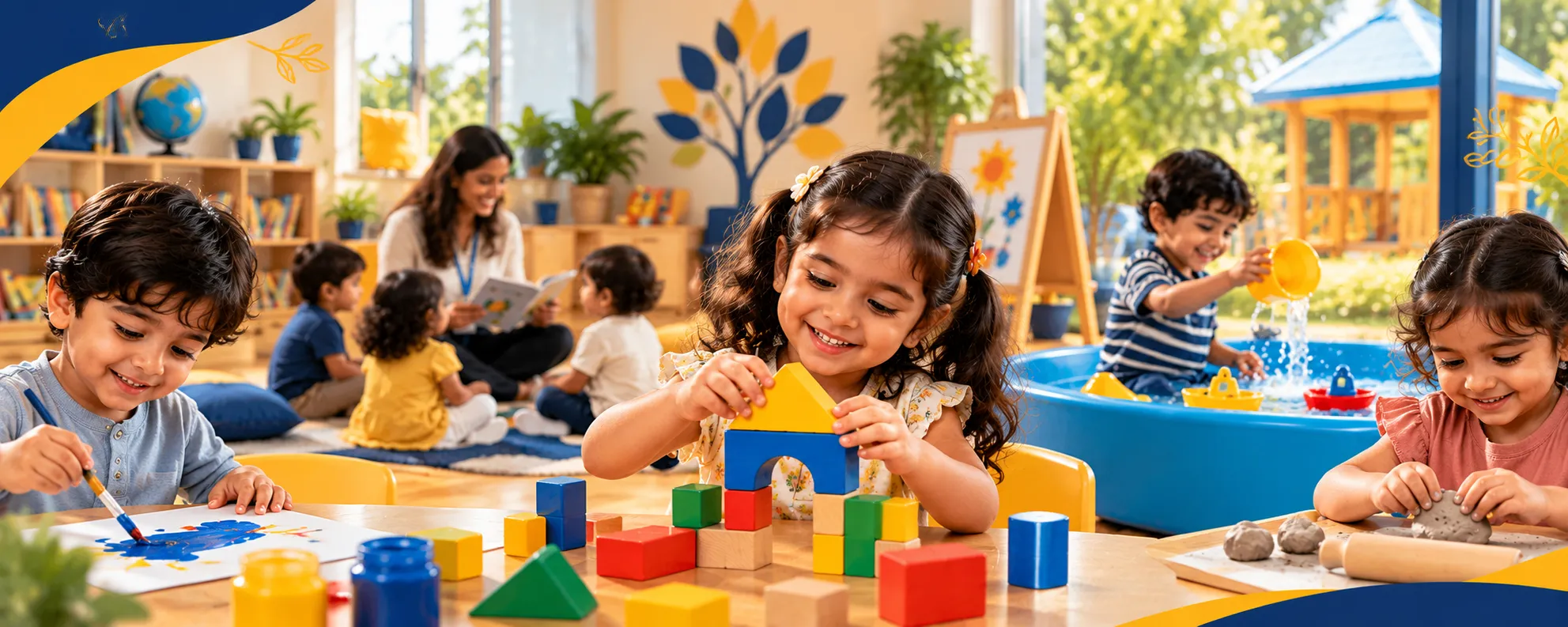
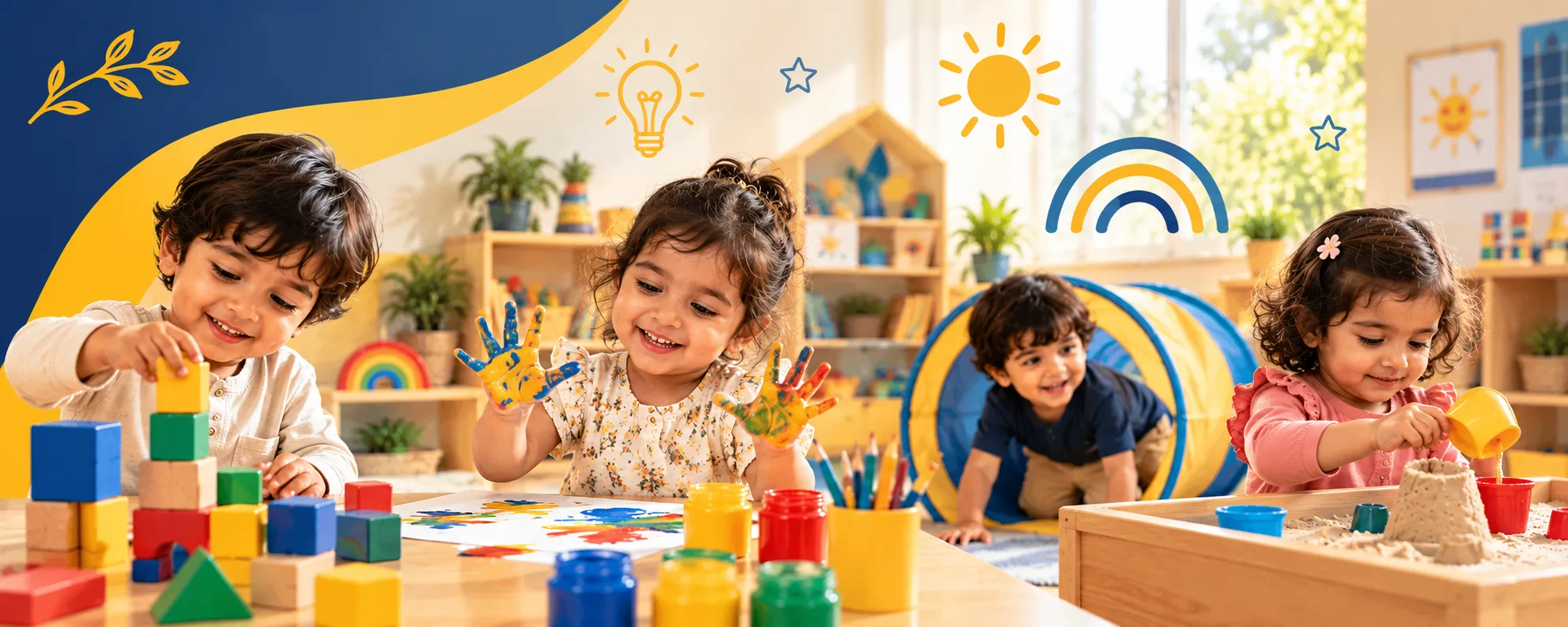
Age-appropriate playgroup activities may include building blocks, puzzles, playdough, painting, music, storytelling, pretend play, water and sand exploration, and supervised outdoor movement. These activities offer opportunities to practise fine and gross motor skills, language, creativity, coordination and early problem-solving. Activities should be adapted to children's abilities and supervised for safety.
Playgroup can help children become familiar with group settings, simple routines, transitions, peer interaction and communicating with adults outside their family. These experiences may make the move to preschool or nursery more familiar. School readiness is broader than academic skills and develops at different rates, so playgroup should support confidence and curiosity rather than pressure children to achieve milestones early.
Playgroup generally emphasises early social interaction, sensory exploration, play and adjustment to a group environment, particularly for younger children. Preschool usually offers a more developed early-learning programme with increasing emphasis on language, early mathematical concepts, routines and preparation for the next educational stage. The exact age range and curriculum vary by school, so parents should compare individual programmes.
Parents can look at educator-child interactions, supervision, hygiene, safety measures, age-appropriate activities, daily routines, communication with families and how the school supports settling-in. Visiting the setting and asking how educators respond to distress, conflict and individual developmental needs can provide useful insight. The best fit is a safe, warm environment where a child can explore and build relationships at their own pace.