FAQs
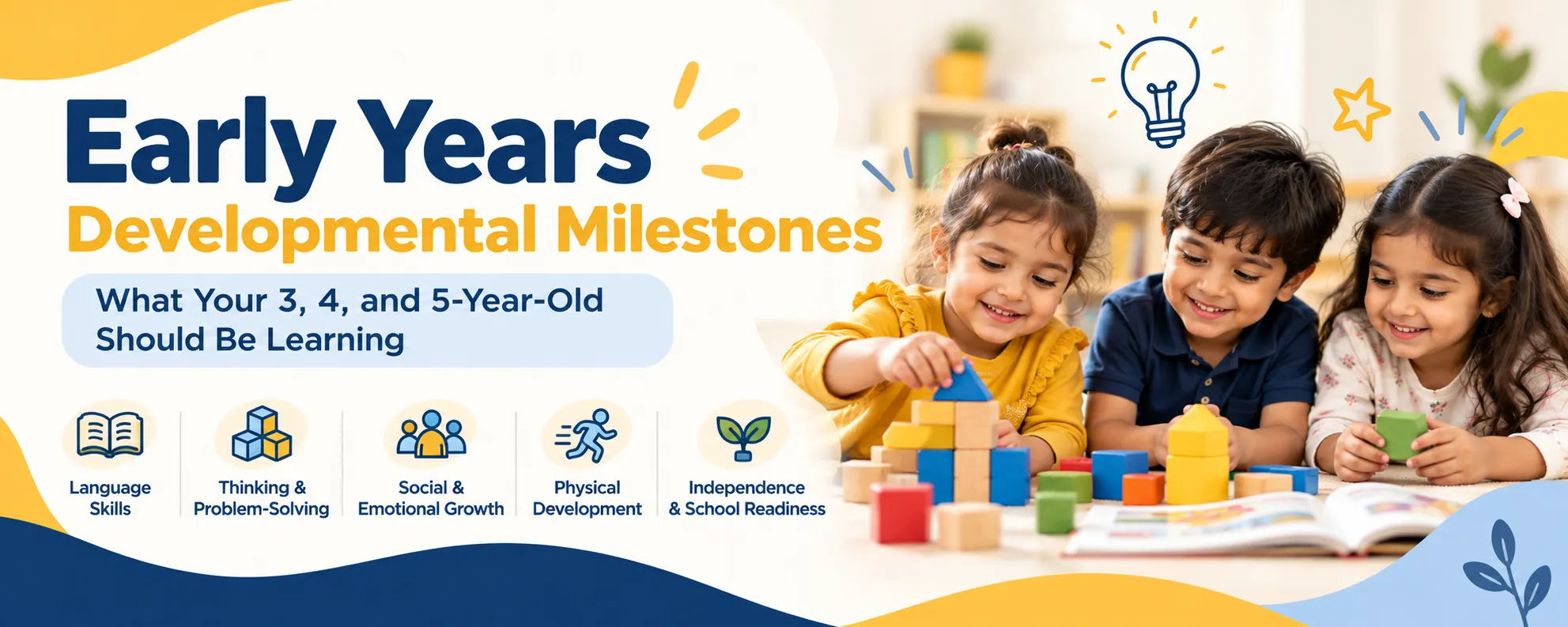
A three-year-old is typically developing communication, early social interaction, basic self-help skills, movement and curiosity about the surrounding world. Learning may include talking about familiar objects, exploring stories, building with blocks, sorting objects and practising simple routines. Children vary in how quickly these skills emerge.
A four-year-old may be developing longer sentences, early storytelling, turn-taking, counting, pattern recognition and greater independence during everyday routines. There is no single checklist every child must master before Junior KG. Families should check the school's expectations and consider the child's overall development rather than focusing only on academic skills.
A five-year-old may be developing early reading and writing, number sense, problem-solving, communication, cooperation and the ability to follow familiar routines. Grade 1 readiness also includes social-emotional development and independence. Expectations vary by school, curriculum and individual child.
Important areas include language and communication, thinking and problem-solving, social-emotional development, gross and fine motor skills, and growing independence. Looking at all these areas together gives a more useful picture of development than focusing only on letters, numbers or reading.
No. Children develop at different rates, and a child may be more advanced in one area than another. Milestones are useful guides for noticing progress, not deadlines or a way to compare children. If a child loses previously acquired skills or a parent has ongoing concerns, professional guidance is appropriate.
The IB Primary Years Programme encourages inquiry, conceptual understanding and connections between areas of learning. In an early years setting, these principles can be reflected through play, exploration, discussion, collaboration and reflection. The specific curriculum, activities and developmental expectations depend on how each school implements the programme.
Consider speaking with a paediatrician or qualified child-development professional if your child loses skills they previously had, has persistent difficulties with communication or everyday activities, or you have concerns about their progress. A teacher can share observations from the classroom, but professional guidance is important when developmental concerns arise.
Share this article
Related Blogs
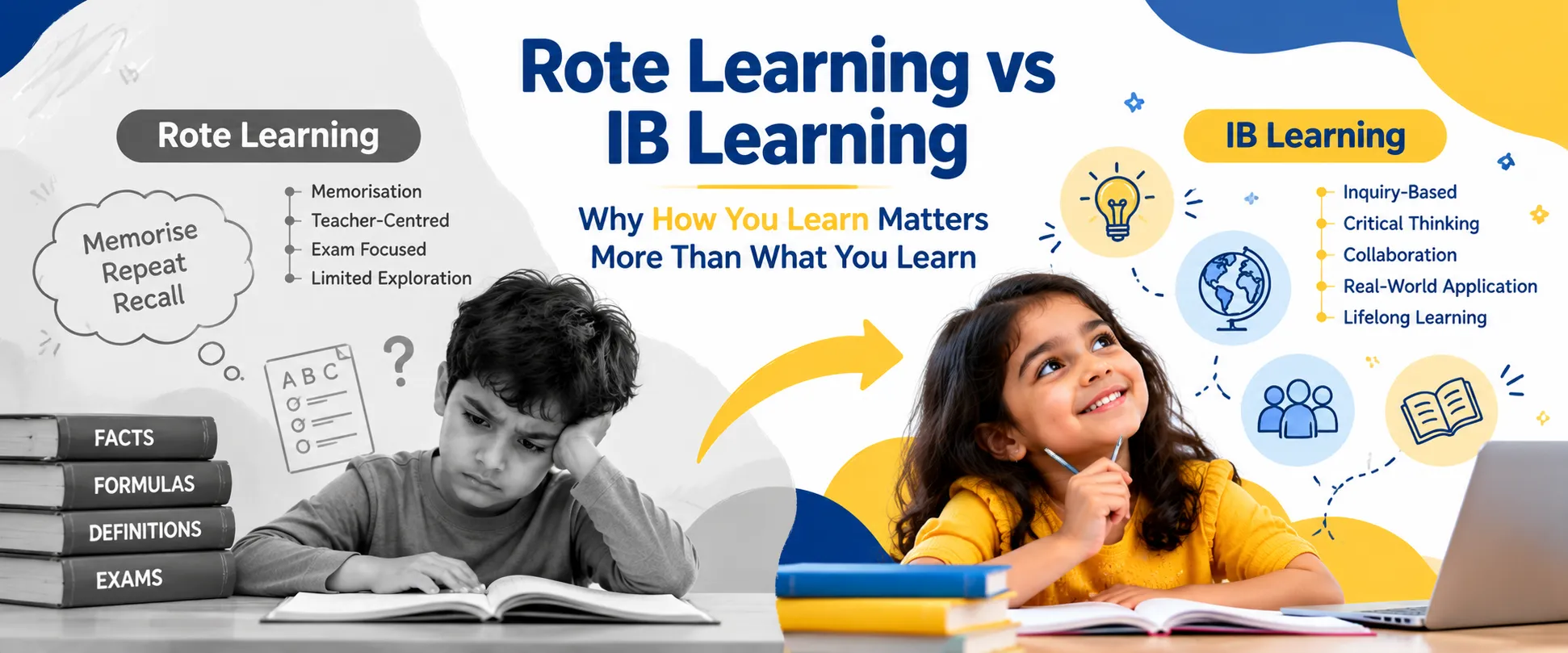
Rote Learning vs IB Learning and Why How You Learn Matters
Compare Rote Learning vs IB Learning values. Discover what is rote learning in education and explore what is IB education system benefits for success. Learn more!
Rote Learning vs IB Learning and Why How You Learn Matters
Compare Rote Learning vs IB Learning values. Discover what is rote learning in education and explore what is IB education system benefits for success. Learn more!
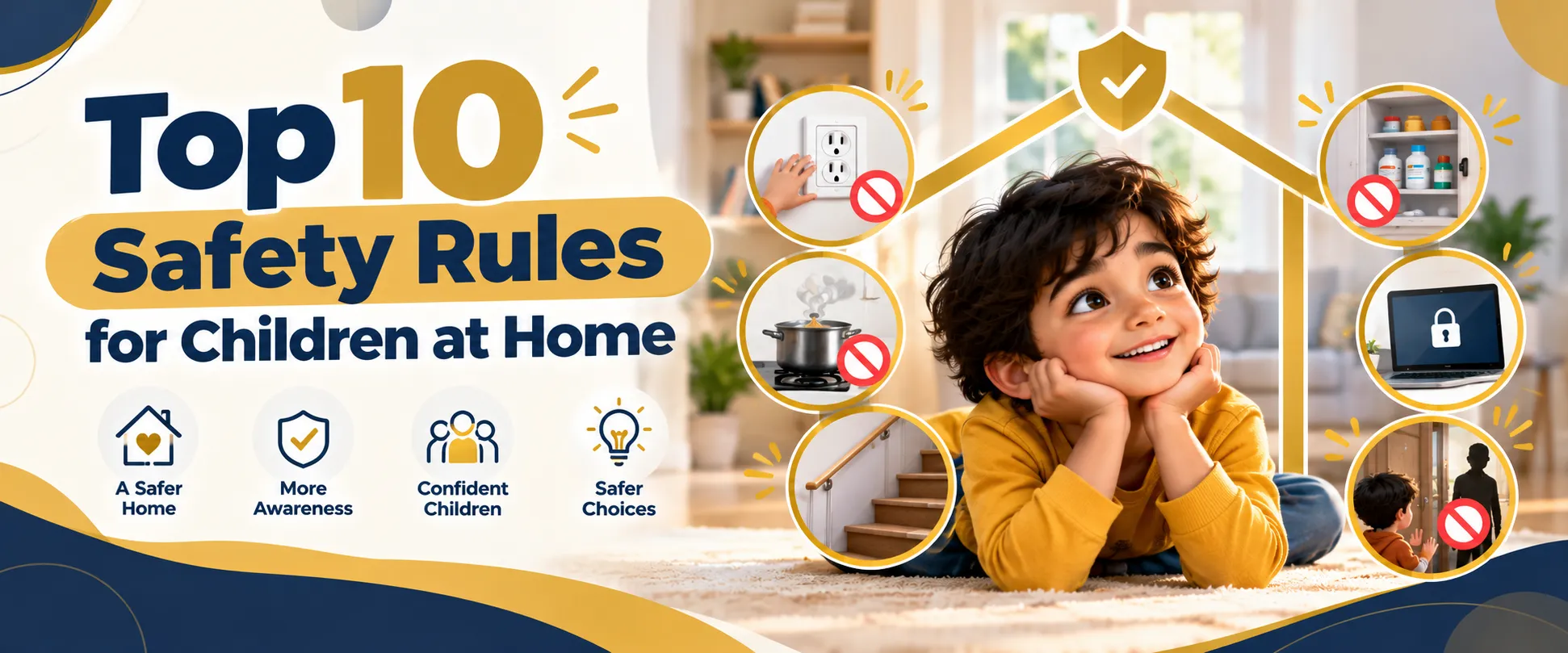
10 Safety Rules for Children at Home Every Parent Should Teach
Learn 10 essential safety rules for children at home, including electrical, fire, kitchen, online, stranger and emergency safety tips for kids.