FAQs
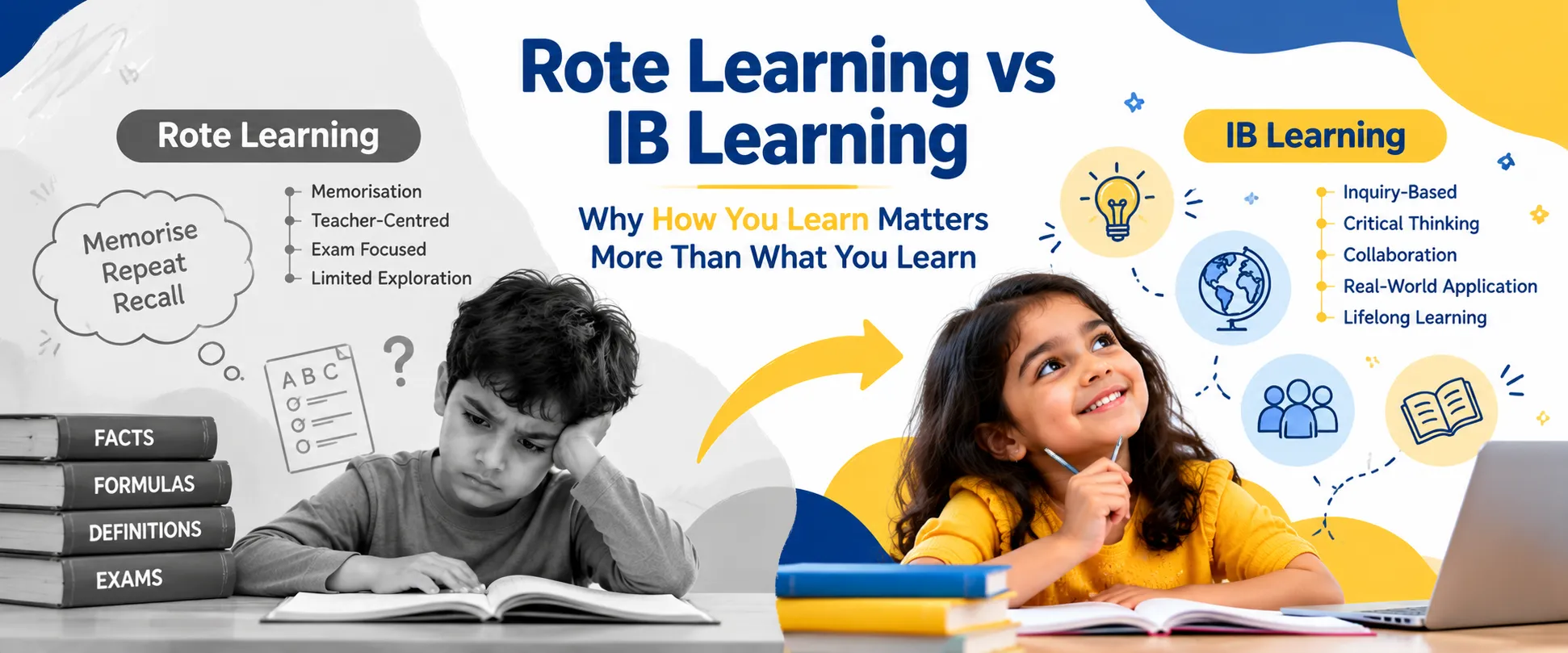
Rote learning relies primarily on repetition and memorisation for recall, while IB learning places greater emphasis on inquiry, conceptual understanding, application, reflection and student agency. IB students still learn important facts, but they are also encouraged to understand and use that knowledge in different contexts.
IB learning is not universally “better” for every learning task, because memorisation can be useful for foundational knowledge. However, IB education places greater emphasis on understanding, inquiry, application and transferable skills rather than relying primarily on recall.
IB learning is an approach to education that emphasises inquiry, conceptual understanding, critical thinking, communication, collaboration, reflection and applying knowledge in meaningful contexts. Students are encouraged to take an active role in their learning.
IB education can help students develop subject knowledge alongside critical thinking, communication, research, collaboration, self-management, reflection and problem-solving skills. The IB approach also encourages students to make connections and apply learning across different contexts.
Yes. IB students still learn and remember subject-specific knowledge, vocabulary, concepts and processes. The difference is that memorisation is combined with opportunities to understand, apply, analyse and reflect on knowledge.
Yes. Rote learning can be useful for factual recall, foundational knowledge and practising information that needs to become automatic. Its limitations arise when memorisation is used without sufficient opportunities for understanding, application or critical thinking.
Inquiry-based learning encourages students to ask questions, investigate ideas, examine evidence and construct understanding. It can help students become more active participants in learning and develop skills that extend beyond recalling information.
IB learning can develop critical thinking by encouraging students to question assumptions, evaluate evidence, compare perspectives, make connections and explain their reasoning. Students are often asked not only for an answer but also to consider how they know it and why they reached that conclusion.
Traditional education is a broad term covering many different teaching approaches, so it cannot be compared with IB as a single fixed model. In general, IB places strong emphasis on inquiry, conceptual understanding, student agency and international-mindedness, while some traditional approaches may place greater emphasis on direct instruction, content coverage and examination preparation. Individual schools can combine these approaches in different ways.
Application shows whether students can use what they know beyond the exact example in which they learned it. Being able to transfer a concept to a new problem, context or situation is an important part of deeper learning.
Share this article
Related Blogs

10 Safety Rules for Children at Home Every Parent Should Teach
Learn 10 essential safety rules for children at home, including electrical, fire, kitchen, online, stranger and emergency safety tips for kids.
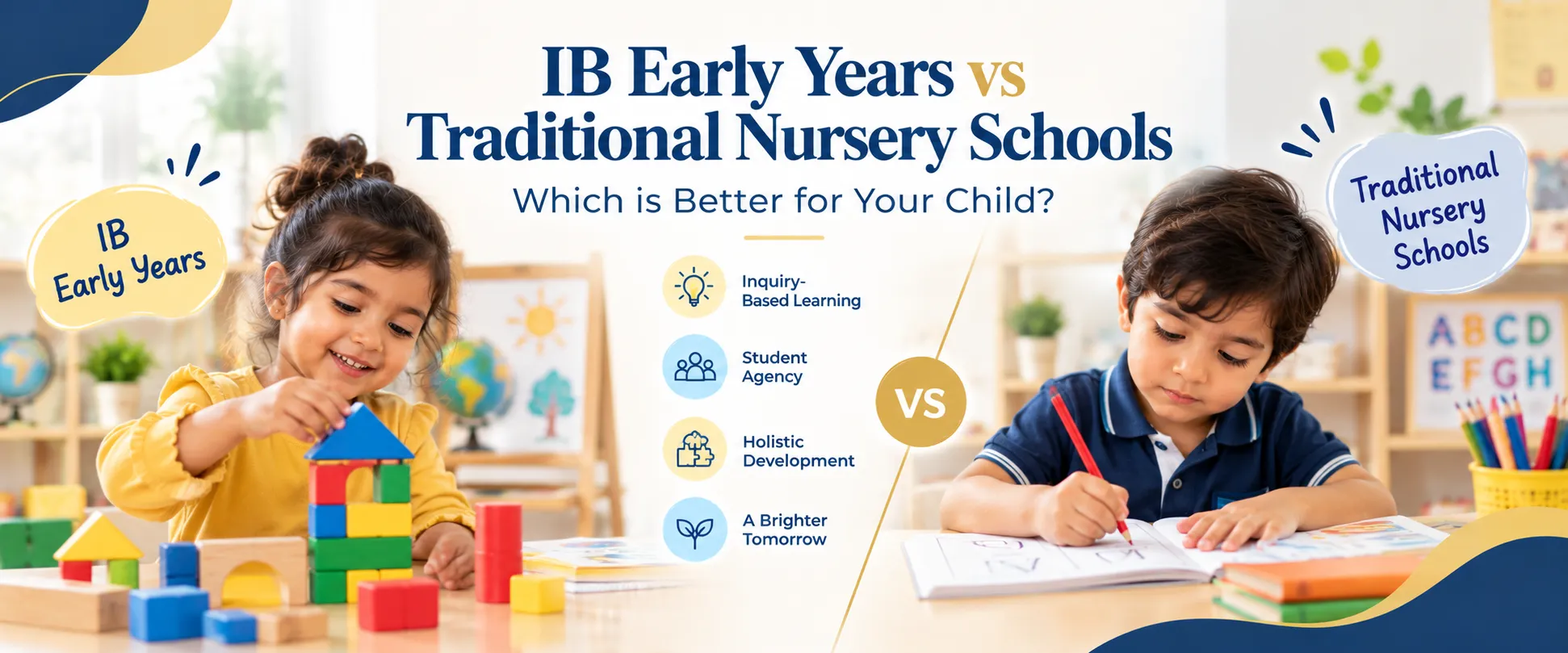
Early Years vs Traditional Nursery: Key Differences
IB Early Years vs traditional nursery: compare teaching methods, play-based learning, student agency, assessment and classroom environments.
How to Prepare Your Child for Playgroup: A Parent's Checklist
Preparing your toddler for their first day of playgroup? Follow this practical parent checklist covering routines, separation, packing and drop-off tips.