FAQs
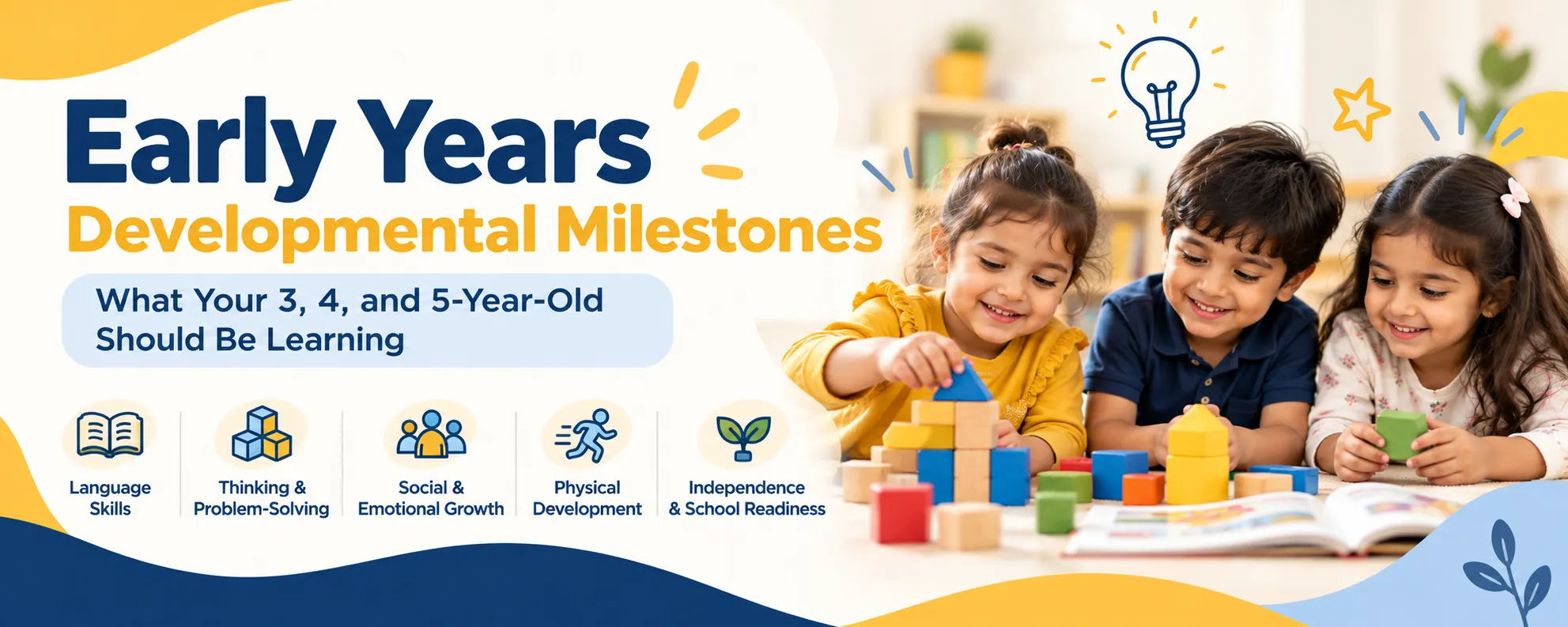
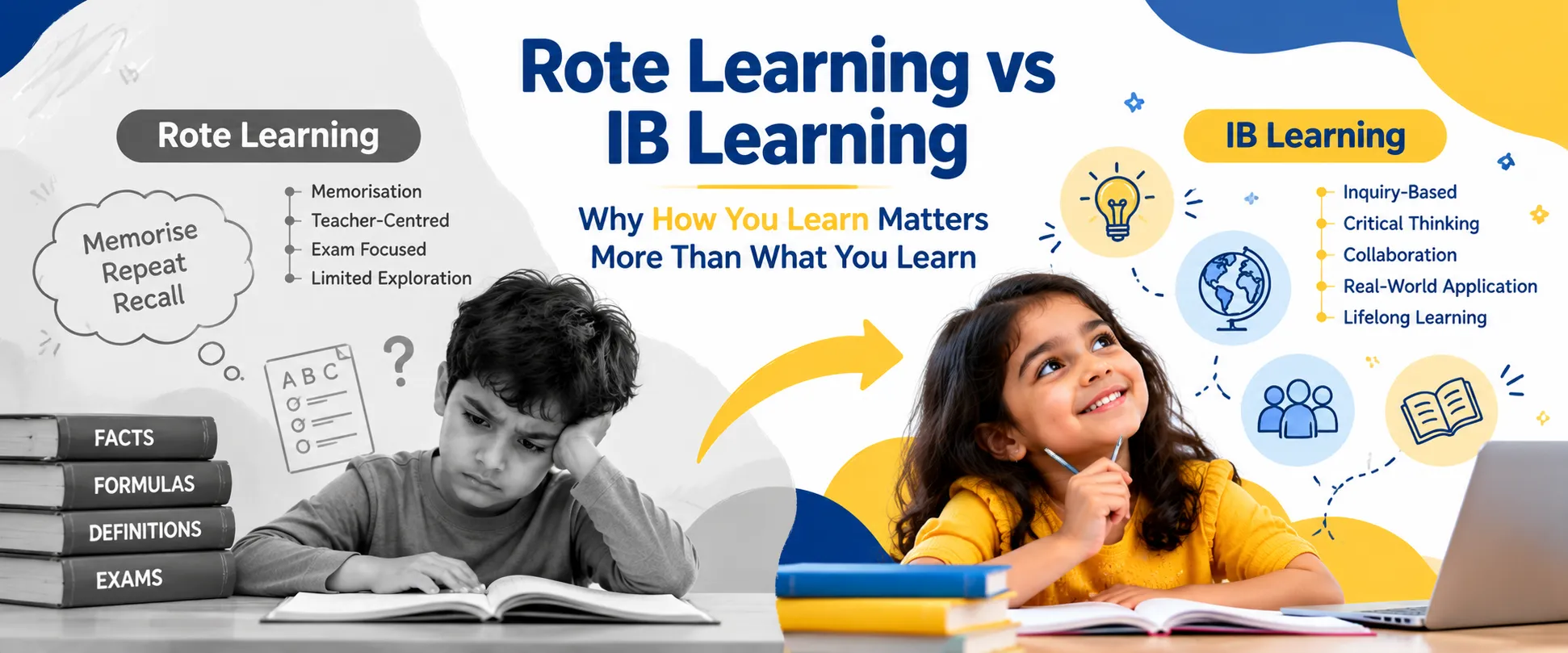
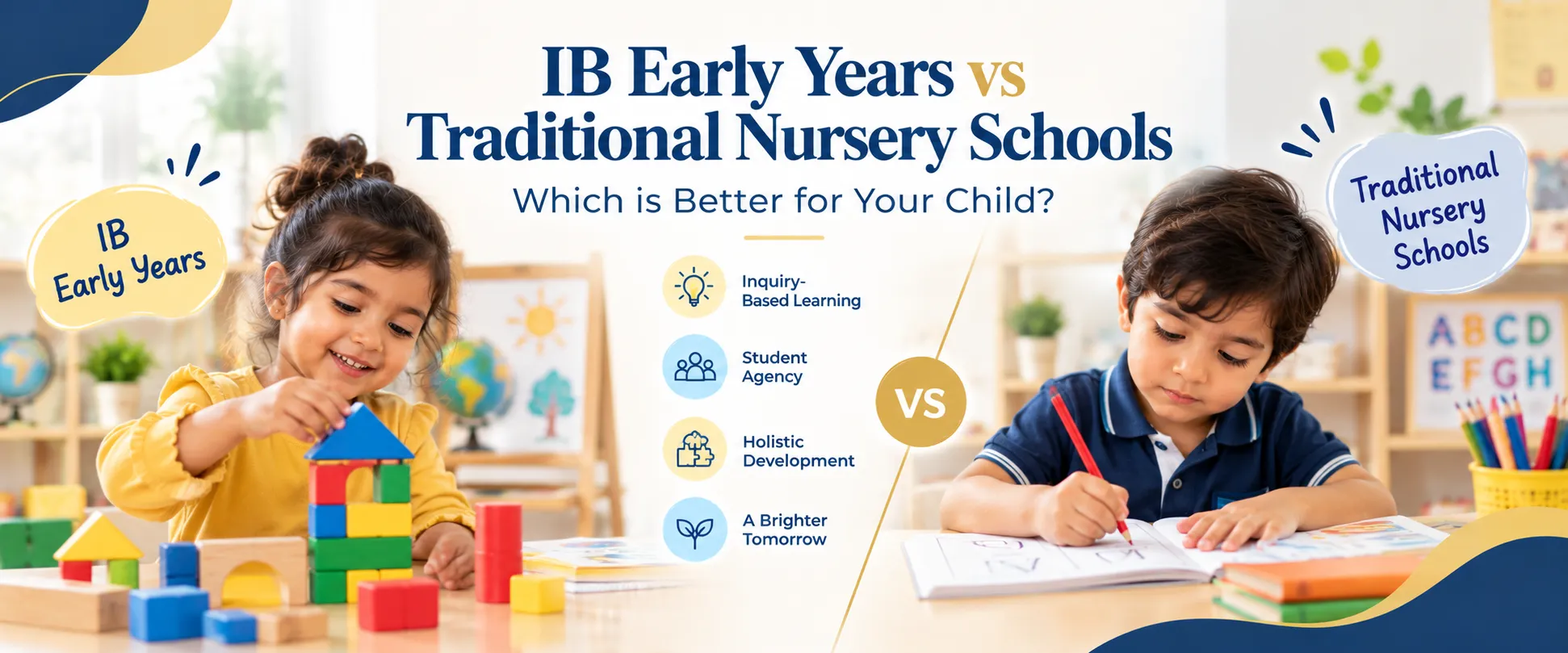
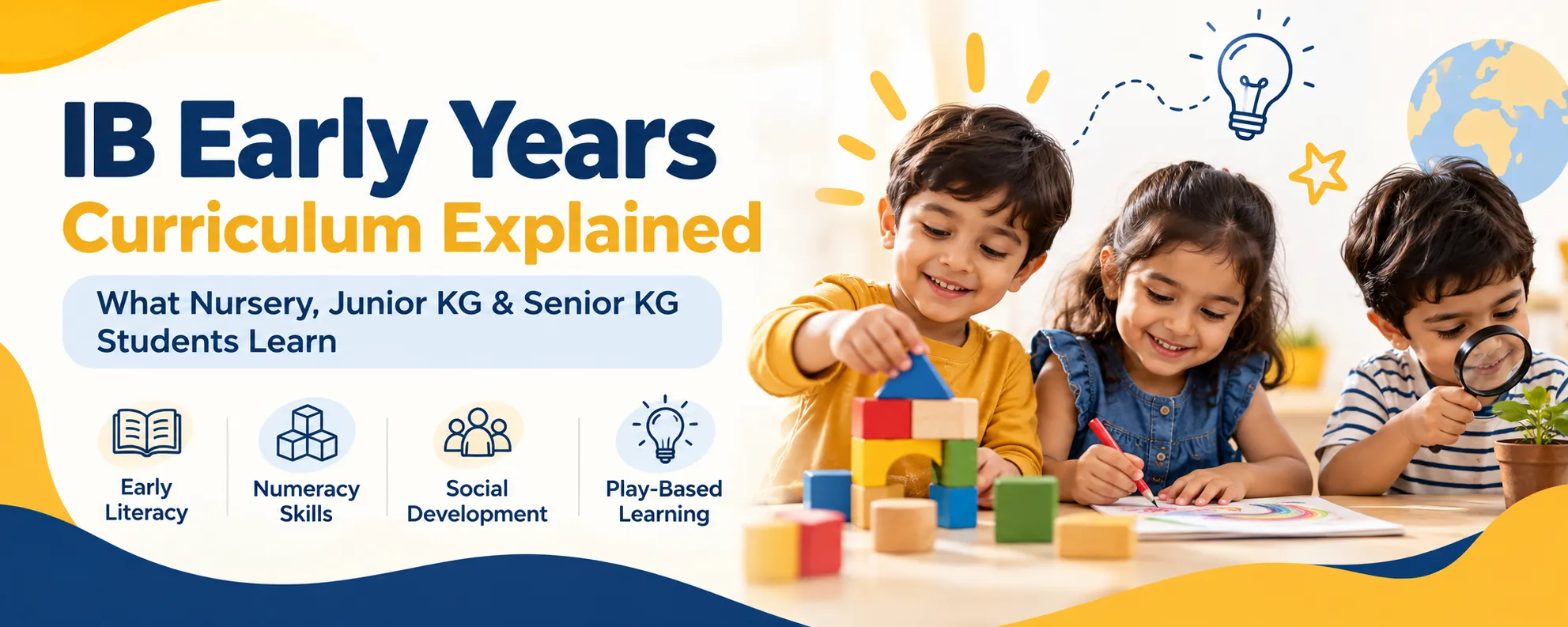
The IB Early Years curriculum refers to learning for young children within the International Baccalaureate Primary Years Programme (PYP). It encourages inquiry, conceptual understanding and connections across subjects. Children develop academic foundations alongside social, emotional, physical and communication skills.
IB Nursery typically focuses on settling into the classroom, sensory exploration, early language, simple routines, self-help skills and learning through play. Children begin to explore their surroundings, communicate their needs and interact with other children.
IB Junior KG generally builds on early learning through stories, letter and sound awareness, counting, sorting, cooperative play and more developed communication. Children begin to explain their ideas, ask questions and follow familiar multi-step routines.
IB Senior KG typically supports stronger early literacy and numeracy, collaboration, independent inquiry, problem-solving and reflection. Children also develop routines and learning habits that can help them transition to Grade 1.
No single, identical Nursery-to-Senior-KG syllabus is prescribed for every IB PYP school. The PYP provides a framework for inquiry-based learning, while schools plan learning experiences that reflect their context, students' developmental needs and curriculum requirements.
The six transdisciplinary themes are Who We Are, Where We Are in Place and Time, How We Express Ourselves, How the World Works, How We Organize Ourselves, and Sharing the Planet. They help schools connect learning across subject areas through meaningful inquiries.
Play gives children opportunities to explore ideas, practise language, solve simple problems, develop motor skills and learn to interact with others. With thoughtful guidance from teachers, play can support both conceptual understanding and social-emotional development.
Parents can encourage reading, conversation, counting through everyday activities, independence with simple routines and positive social interaction. A supportive routine and regular communication with the school can help parents understand their child's progress and areas where extra support may be useful.
The PYP can offer a valuable learning approach for children who benefit from inquiry, exploration and connections between ideas. However, each child is different. Parents should visit the school, ask about classroom practices and assessment, and consider whether the school's approach meets their child's needs.
The main difference is the level of development and independence expected. Nursery usually emphasises settling in, sensory exploration and early communication; Junior KG builds language, early literacy and numeracy, and cooperation; Senior KG places greater emphasis on independent inquiry, problem-solving, reflection and preparation for the transition to primary school. The exact progression varies by school.
Share this article
Related Blogs
What Is the IB Early Years Programme? A Parent's PYP Guide
Discover what the IB Early Years Programme is, how PYP learning works, and how inquiry, play, agency and ATL skills support young learners.
What Is an IB Playgroup? PYP Early Years Guide for Parents
What is an IB playgroup? Learn how IB-inspired playgroup learning supports inquiry, play, independence, social skills and early childhood development.
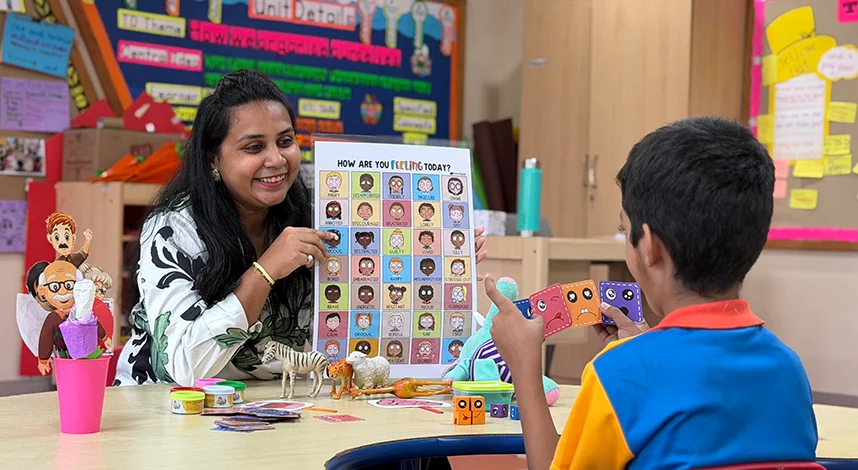
Inclusive Education in Schools for Learning Differences in the IB
Explore inclusive education in schools. Discover learning differences in children and see how schools support learning differences for IB success. Learn more!