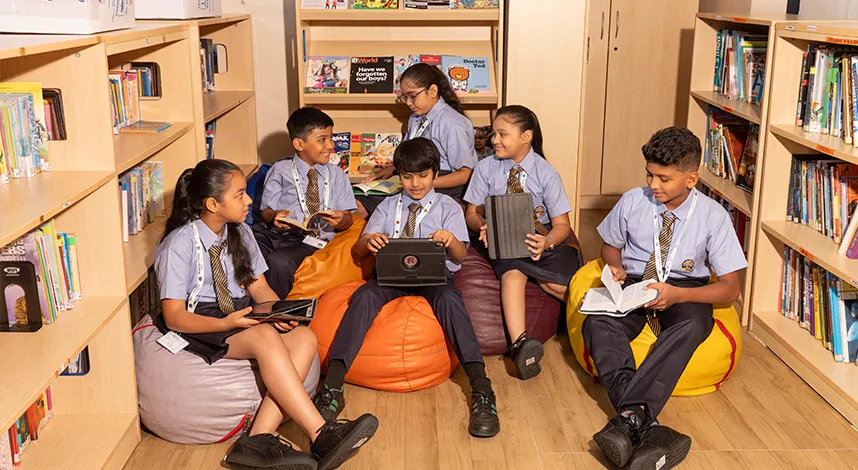
Every child learns and understands the world in their own unique way. While some children absorb information through listening, others learn best through movement, creativity, or hands-on experiences. Recognizing these differences is key to supporting a child's learning journey. Understanding the different types of learning styles in children — visual, auditory, kinesthetic, and reading/writing — helps parents and educators identify how a child learns best. The International Baccalaureate (IB) curriculum embraces and celebrates every learner by creating meaningful, personalized learning experiences beyond the traditional one-size-fits-all approach.
Decoding the Different Learning Styles
Before looking at how schools adapt, it helps to understand the primary ways children absorb information. Most learners fall into one (or a combination) of these four categories:
- Visual Learners: They think in pictures. They absorb information best through diagrams, charts, mind maps, and illustrated books.
- Auditory Learners: They learn through listening and speaking. They thrive during class discussions, storytelling, podcasts, and verbal instructions.
- Kinesthetic/Tactile Learners: These are the "hands-on" discoverers. They need to move, build, touch, and physically experiment to grasp abstract concepts.
- Reading/Writing Learners: They connect deeply with the written word. They love worksheets, taking detailed notes, reading textbooks, and writing essays.
Most children show a blend of these styles rather than fitting neatly into one box — which is exactly why a flexible teaching approach like the IB matters more than trying to label a child.
The IB Advantage: Moving Beyond One-Size-Fits-All
In many rigid educational systems, a single learning style (usually reading/writing) is prioritized, leaving other brilliant minds struggling to keep up. The IB framework stands out because it doesn't force a child to adapt to a single teaching method; instead, the teaching adapts to the child.
Here is exactly how IB schools organically personalize the learning journey across all age groups:
Inquiry-Based Learning
Lessons begin with a central question rather than a lecture. For a unit on ecosystems, a visual learner might map a food web, a kinesthetic learner might build a physical terrarium, and an auditory learner might debate conservation. The goal is identical, but the path matches the child's strengths.
Multi-Sensory Assessments
To ensure intelligence is never bottlenecked by rigid exam formats, the IB evaluates understanding through diverse methods. Students can demonstrate mastery via oral presentations, digital portfolios, 3D scientific models, or written research papers.
The Power of Student Agency
IB students are co-architects of their learning. Learners who thrive on collaboration can opt for group-led projects, while those who need quiet reflection can utilize independent study units to process information at their own pace.
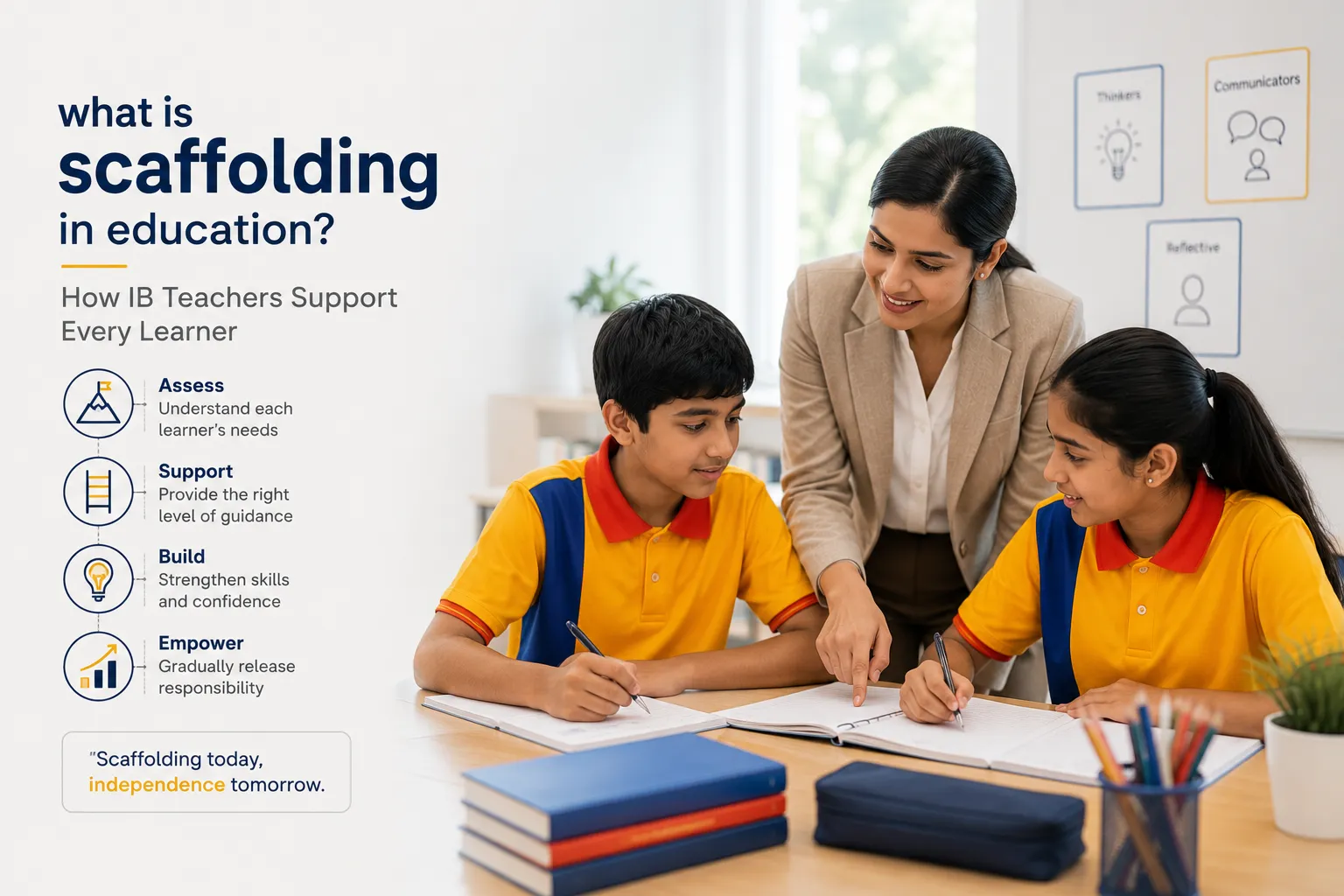
Differentiated Teaching (ATL)
IB educators utilize Approaches to Learning (ATL) to design multi-sensory lessons. A single unit naturally weaves together collaborative tasks, independent research, visual multimedia, and physical experimentation to hit every learning style simultaneously. This is sometimes called "differentiated instruction," and it's one of the core reasons parents researching how IB differs from a traditional curriculum choose the programme.
Preparing Children for an Adaptable Future
In the professional world, problems aren't solved by filling out multiple-choice bubbles. Success requires knowing your personal strengths and understanding how to apply them.
By recognizing and nurturing your child's specific learning style, an IB education does something far more valuable than helping them pass a test: it teaches them how they learn best. This self-awareness is the ultimate life skill, turning students into confident, self-directed, and future-ready leaders.
In Partnership with Parents
Every child's educational journey is strongest when home and school speak the same language. By observing how your child interacts with the world at home — whether they doodle, ask endless questions, or take things apart to fix them — we can collaborate to unlock their full academic and personal potential.
Further Reading
- The International Baccalaureate – Approaches to Teaching and Learning
- How IB Assessment Works: Valuing Diverse Skills
References:
International Baccalaureate Organization. What is an IB Education?
International Baccalaureate Organization. Approaches to Learning (ATL).
International Baccalaureate Organization. IB Learner Profile.
OECD. Learning Compass 2030. Harvard Project Zero. Agency by Design.
FAQs
The four main learning styles are visual (learning through images and diagrams), auditory (learning through listening and discussion), kinesthetic (learning through movement and hands-on activity), and reading/writing (learning through text). Most children show a mix of these rather than fitting one category exclusively.
Watch how your child naturally engages with new information at home — whether they gravitate toward pictures and drawing, ask questions and talk things through, want to touch and build, or prefer reading and writing things down. A school using inquiry-based teaching, like the IB, can also help identify this through varied classroom activities and assessments.
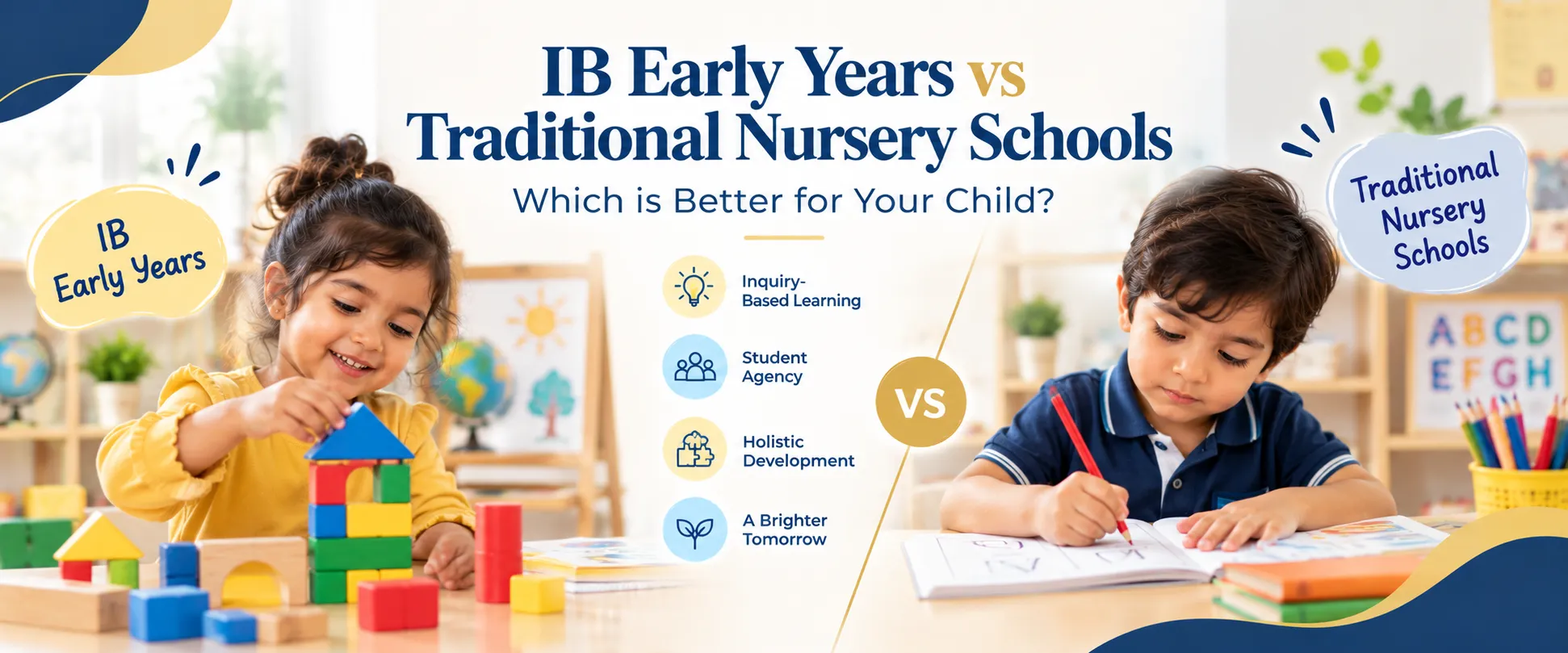
Unlike curricula built around a single teaching and testing method, the IB uses inquiry-based learning and multiple assessment formats — oral presentations, projects, portfolios, and written work — so students are taught and evaluated in ways suited to how they individually learn best, not just one standard exam format.
Learning style differences can be gently supported from early primary years onward. IB Primary Years Programme (PYP) classrooms build in multi-sensory activities from the start, so children are never forced into one mode of learning before they're ready to explore what works for them.
Yes — most children are a blend of two or more styles rather than a single fixed type. This is one of the key reasons flexible, inquiry-based teaching methods tend to serve real classrooms better than a one-size-fits-all approach.