FAQs
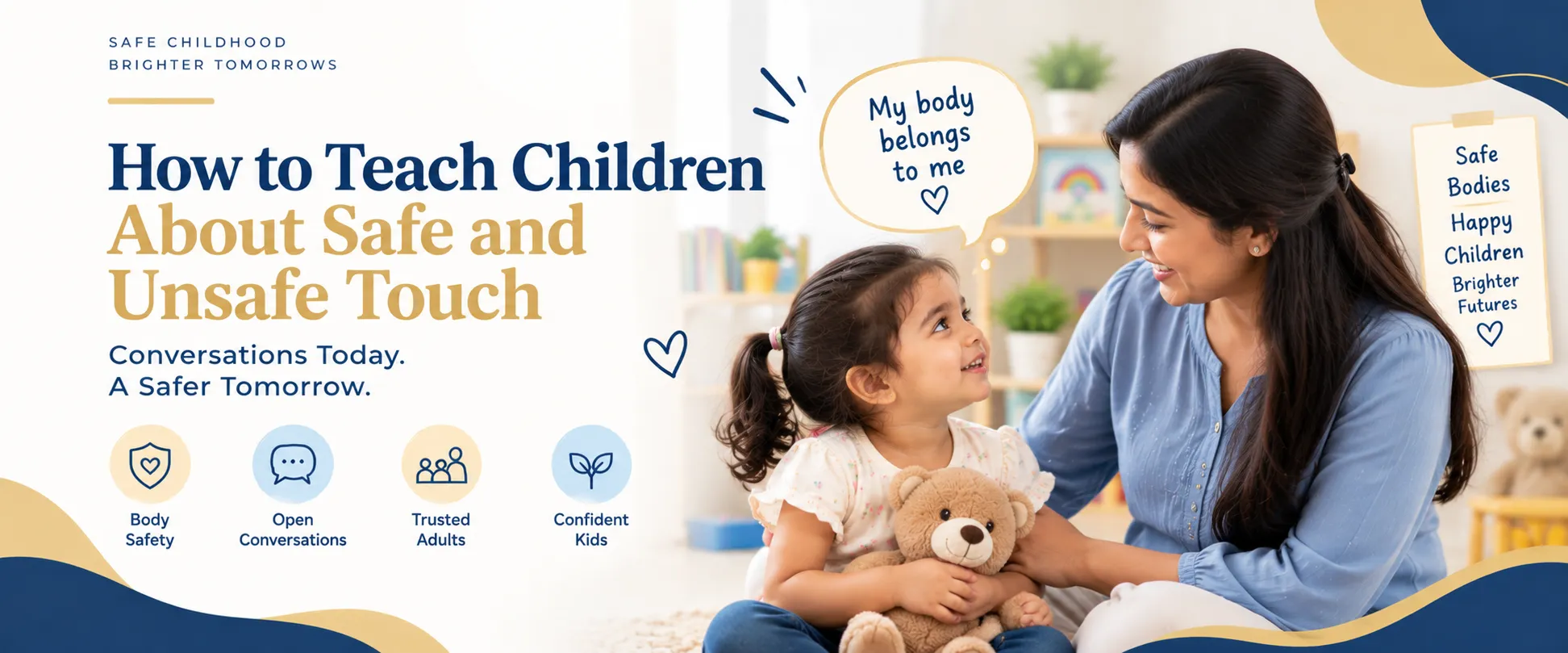
Safe touch is a touch that is appropriate, respectful and connected with care, affection or safety. Examples can include a child-chosen hug, holding hands to cross a road, a high-five or appropriate care from a trusted adult.
Unsafe touch is a touch that hurts, frightens, causes significant discomfort, crosses a child's boundaries or involves inappropriate behaviour. Children should know that they can move away and tell a trusted adult if a touch makes them feel unsafe.
Use simple, age-appropriate conversations about body ownership, private body parts, personal boundaries and trusted adults. Practise phrases such as “No”, “Stop” and “I need help”, and teach children that they can always tell a trusted adult if something worries them.
“Good touch and bad touch” is a commonly used phrase, while “safe and unsafe touch” focuses more clearly on boundaries, context and personal safety. The important message is that children can speak up about unwanted or uncomfortable touch, regardless of who the person is.
Body safety education can begin during early childhood with simple concepts such as body ownership, private body parts, boundaries and saying no. The level of detail can increase as children grow and develop.
Use simple phrases such as “Your body belongs to you” and encourage children to express their preferences about appropriate affection. Help them understand that they can say no to a hug, kiss or other unwanted touch.
Children should learn that they can say no to unwanted or unsafe touch, even when the person is an adult or someone they know. They should also know that if they cannot safely say no in a situation, they can move away when possible and tell a trusted adult afterwards.
Teach children the correct, age-appropriate names for their body parts and explain that the parts covered by underwear are generally private. Explain that there are legitimate care and healthcare situations where adults may need to help, while reinforcing privacy, respect and safety.
No–Go–Tell is a simple body-safety strategy: say “No” or “Stop” if you can, go somewhere safe and tell a trusted adult. Children should also know that if they cannot follow all three steps, they can still tell a trusted adult afterwards.
Stay calm, listen and reassure your child that they did the right thing by telling you and that it is not their fault. Avoid blaming or repeatedly questioning them, and seek appropriate professional or child-protection support when needed.
Share this article
Related Blogs
How to Prepare Your Child for Playgroup: A Parent's Checklist
Preparing your toddler for their first day of playgroup? Follow this practical parent checklist covering routines, separation, packing and drop-off tips.

Preschool vs Playgroup: Key Differences, Ages & Benefits
Preschool vs playgroup: understand the key differences, age groups, activities, benefits and how to choose the right option for your child.

Best Age to Start Playgroup: 5 Signs Your Child Is Ready
Wondering when to start playgroup? Discover the right age, 5 signs of readiness and practical tips to help your child transition smoothly.