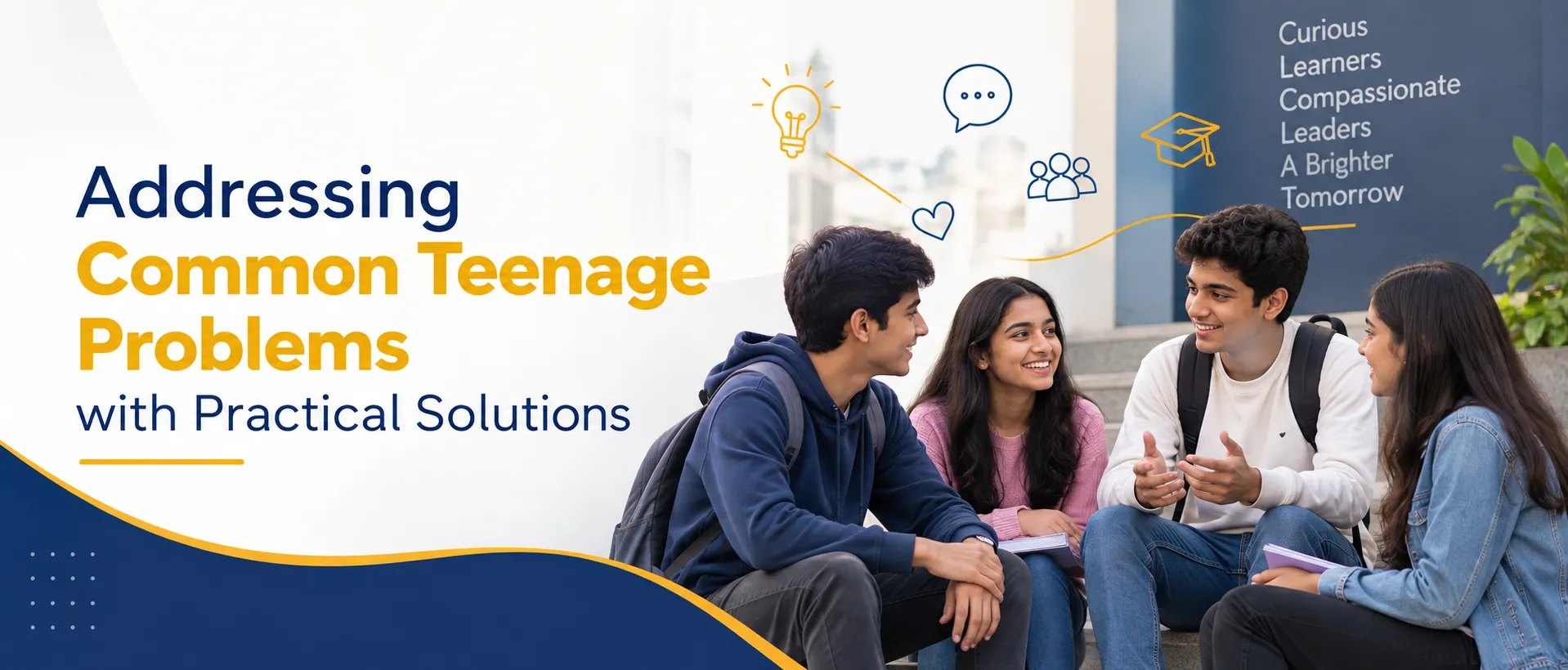
The teenage years are a time of remarkable growth and discovery. Young people are developing their identity, becoming more independent, navigating friendships and relationships, making important academic decisions and learning how to manage greater responsibilities.
It is also a time when challenges can feel particularly intense.
From academic pressure and friendship issues to social media, body image and emotional ups and downs, common teenage problems can affect a young person's mental health, self-esteem, relationships, academic performance and overall well-being. Understanding these challenges can help parents and educators provide the right support without taking away a teenager's growing independence.
The problems teenagers face today can look different from one child to another. Some challenges are temporary and part of normal adolescent development, while others may require additional support from parents, teachers, counsellors or healthcare professionals.
Here are some of the most common challenges teenagers face—and practical ways parents, teachers and teenagers themselves can respond.
1. Academic Pressure and Exam Stress
Tests, assignments, competition and expectations about future studies can make academics a major source of stress.
Academic stress in teenagers can become particularly challenging when students feel that grades define their future or self-worth. Helping teenagers develop healthy study habits, realistic expectations and effective time management can reduce unnecessary pressure.
What can help?
Encourage teenagers to focus on progress rather than perfection.
A few practical strategies include:
- Breaking large tasks into smaller, manageable steps.
- Creating a realistic study timetable.
- Taking regular breaks.
- Getting enough sleep rather than studying late every night.
- Asking teachers for help when they are struggling.
- Celebrating effort and improvement, not just grades.
Parents can also help by creating a home environment where academic conversations are not always about marks.
It can also help to ask, “How are you managing?” rather than only “What did you score?” This opens the door to conversations about stress, workload and emotional wellbeing.
2. Friendship Problems and Peer Pressure
Friendships become extremely important during adolescence. At the same time, disagreements, exclusion, changing friendship groups and pressure to fit in can be difficult to manage. Teenagers may sometimes make choices simply because they are worried about being left out.
Peer pressure can influence decisions about friendships, appearance, social media, relationships and behaviour. Learning to recognise unhealthy pressure and set personal boundaries is an important part of adolescent development.
What can help?
Teach teenagers that belonging should never require them to compromise their values or safety.
Encourage them to:
- Choose friends who respect them.
- Speak up when something makes them uncomfortable.
- Learn to say “no” confidently.
- Walk away from situations that feel unsafe.
- Talk to a trusted adult when a friendship problem becomes overwhelming.
Healthy friendships should provide support, respect and space to be yourself.
Parents should also avoid immediately criticising a teenager's friends. Asking questions and listening first can make it easier for teenagers to share what is really happening.
3. Social Media and Comparison
Social media can help teenagers connect with others, discover interests and express themselves. But constant exposure to carefully curated images and lifestyles can also create unrealistic expectations.
A teenager may begin to think:
“Everyone else is happier than me.”
“Everyone looks better than I do.”
“Why don't I have the life they have?”
Social media and teenage mental health are closely connected to conversations around self-esteem, comparison, sleep, online relationships and digital wellbeing. The impact of social media can vary significantly between teenagers, so open communication is often more useful than simply banning it.
What can help?
Encourage teenagers to remember that social media shows moments, not the whole story.
Practical habits include:
- Taking regular breaks from social media.
- Unfollowing accounts that negatively affect self-esteem.
- Keeping phones away during meals and before bedtime.
- Spending time on offline hobbies and activities.
- Talking openly about what they see online.
The goal is not necessarily to eliminate social media, but to develop a healthy relationship with it.
Parents can also encourage teenagers to notice how they feel after using particular platforms or accounts. This can help them make more intentional choices about their digital habits.
4. Body Image and Self-Confidence
Physical changes are a natural part of adolescence, but teenagers can become highly conscious of their appearance. Comments from peers, social media trends, puberty-related changes and unrealistic beauty standards can affect how young people see themselves.
What can help?
Help teenagers understand that their bodies are growing and changing, not something they need to constantly compare with others.
Focus conversations on:
- Health rather than appearance.
- Strength and capability rather than size.
- Individuality rather than comparison.
- Positive qualities beyond physical appearance.
Most importantly, adults should model respectful language about their own bodies and the bodies of others.
If concerns about appearance, eating, exercise or body image become persistent or begin affecting everyday life, relationships or wellbeing, parents should consider seeking guidance from an appropriate healthcare professional.
5. Mood Changes and Emotional Ups and Downs
Teenagers can experience strong emotions as they navigate physical, social and emotional changes. They may seem happy one moment and frustrated or withdrawn the next.
Mood changes can be part of adolescence, but persistent or significant changes in mood, behaviour, sleep, appetite, relationships or school engagement deserve attention.
What can help?
Instead of immediately saying, “It's not a big deal,” try:
“I can see that this is difficult for you. Do you want to talk about it?”
Give teenagers opportunities to:
- Name what they are feeling.
- Take time to calm down.
- Talk without immediately being judged.
- Develop healthy ways of managing stress.
- Know when and how to ask for help.
Listening does not always mean solving the problem. Sometimes, being heard is the first step.
Creating regular opportunities for conversation—rather than waiting for a crisis—can make it easier for teenagers to ask for support when they need it.
6. The Need for Independence
Teenagers naturally want greater freedom and privacy. Parents, meanwhile, may worry about the choices their children are making. This can create conflict.
The growing need for independence is a normal part of adolescent development. Teenagers benefit from having increasing responsibility while still having clear boundaries and reliable adult support.
What can help?
Replace some rules with shared responsibility.
Instead of simply saying:
“Because I said so.”
Try explaining:
“Here is why this boundary matters. Let's talk about how we can give you more independence while keeping you safe.”
Clear expectations, consistent boundaries and age-appropriate freedom can help teenagers develop responsibility without feeling controlled.
Giving teenagers appropriate choices—such as how they organise their study time or manage certain responsibilities—can help them practise decision-making while parents remain available for guidance.
7. Time Management and Balancing Responsibilities
Schoolwork, extracurricular activities, friends, family commitments and screen time can quickly become overwhelming. Many teenagers struggle not because they are unwilling to work, but because they have not yet developed effective ways to manage competing priorities.
Poor time management can contribute to teenage stress, procrastination, missed deadlines and reduced sleep.
What can help?
Teach them to:
- Prioritise important tasks.
- Break large assignments into smaller goals.
- Use a planner or calendar.
- Avoid leaving everything until the last minute.
- Schedule time for rest.
- Protect their sleep.
Being productive does not mean being busy every minute of the day.
A healthy routine should include academics, physical activity, relationships, hobbies, downtime and adequate sleep.
8. Conflict With Parents
Arguments with parents are common during adolescence. Teenagers want to be heard, while parents want to protect and guide them.
Parent-teen conflict is often connected to changing expectations around independence, privacy, responsibilities and boundaries.
What can help?
Communication works best when it goes both ways.
Parents can:
- Listen before responding.
- Avoid turning every conversation into a lecture.
- Set clear and reasonable boundaries.
- Allow teenagers to express disagreement respectfully.
- Choose the right time for difficult conversations.
Teenagers, too, can learn to communicate their needs without shouting, blaming or shutting down. The goal isn't to eliminate disagreements. It is to learn how to disagree respectfully.
When conversations become heated, taking a short pause and returning to the discussion later can help both parents and teenagers respond rather than react.
9. Fear About the Future
Choosing subjects, universities, careers or future pathways can feel overwhelming. Teenagers may feel pressure to know exactly what they want to do with their lives.
Academic choices, university admissions, career expectations and comparison with peers can all contribute to future-related anxiety in teenagers.
What can help?
Remind them that one decision does not determine their entire future.
Encourage them to:
- Explore different interests.
- Speak to teachers, counsellors and professionals.
- Identify their strengths and values.
- Research different possibilities.
- Focus on the next step rather than the entire journey.
Career planning should be about discovering possibilities—not creating pressure to have everything figured out at 16 or 17.
Career exploration can be an ongoing process. Helping teenagers understand their interests, strengths and values can be more useful than expecting them to choose one perfect career immediately.
Other Common Problems Teenagers Face Today
The challenges above are among the most common teenage problems, but adolescent wellbeing can also be affected by other issues, including:
- Sleep problems and irregular sleep routines
- Low self-esteem
- Stress and anxiety
- Cyberbullying and online safety concerns
- Difficulty managing emotions
- Academic competition
- Relationship concerns
- Loneliness or social isolation
- Difficulty communicating with parents
- Uncertainty about identity and future goals
Not every challenge requires professional intervention. However, persistent, severe or rapidly changing difficulties should be taken seriously and discussed with an appropriate professional.
How Adults Can Support Teenagers
Teenagers don't always need adults to have all the answers. Often, they need adults who are willing to listen without immediately judging, correcting or solving.
A supportive adult can:
Listen before giving advice.
Ask open-ended questions.
Respect growing independence.
Set clear and consistent boundaries.
Notice changes in behaviour.
Encourage healthy routines and relationships.
Connect them with appropriate support when needed.
Most importantly, keep the door to communication open—even when the teenager doesn't walk through it immediately.
Schools can also play an important role by providing trusted teachers, pastoral support, counsellors, wellbeing programmes and safe opportunities for students to discuss challenges. A strong partnership between home and school can give teenagers a more consistent support network.
Sometimes the most powerful thing we can tell a teenager is:
“You don't have to figure everything out today. I'm here, and we'll work through it together.”
When Should Parents Seek Professional Help?
Parents should consider seeking professional support when emotional or behavioural changes are persistent, severe, worsening or significantly affecting a teenager's everyday life, relationships, sleep, eating, school attendance or academic functioning.
If a teenager talks about self-harm, suicide, feeling that life is not worth living, or being unable to stay safe, treat this as an urgent concern and seek immediate professional or emergency support rather than trying to manage it alone.
Seeking help is not a sign of failure. Early support can give teenagers and families appropriate strategies before a challenge becomes more difficult to manage.
Key Takeaways for Parents
The teenage years can bring significant opportunities for growth alongside new challenges.
- Academic pressure does not have to define a teenager's self-worth.
- Healthy friendships should provide respect, safety and belonging.
- Digital wellbeing is an important part of modern teenage wellbeing.
- Body image conversations should focus on health and self-respect rather than comparison.
- Teenagers need both increasing independence and dependable adult support.
- Healthy sleep, movement, routines and downtime are essential parts of wellbeing.
- Open communication works better than judgement or constant correction.
- Persistent or serious emotional and behavioural changes deserve appropriate professional attention.
- Parents, educators and teenagers can work together to build resilience and healthy coping skills.
FAQs
Common problems faced by teenagers include academic pressure, exam stress, peer pressure, friendship difficulties, social media comparison, body image concerns, mood changes, conflict with parents, time-management challenges and anxiety about future education and careers. The intensity and impact of these challenges vary from teenager to teenager.
Some of the major teenage problems today include academic and exam stress, social media pressure, peer relationships, body image concerns, emotional wellbeing, sleep difficulties, digital distractions and uncertainty about future careers. Supportive communication at home and school can help teenagers develop healthy coping strategies.
Parents can help teenagers manage stress by listening without immediate judgement, helping them break problems into manageable steps, encouraging healthy sleep and physical activity, creating realistic expectations and helping them seek support when needed. Regular conversations can also make it easier for teenagers to talk about stress before it becomes overwhelming.
Teenagers can manage peer pressure by understanding their personal values, learning to say no, choosing supportive friendships, setting boundaries and talking to a trusted adult when they feel unsafe or overwhelmed. Healthy friendships allow teenagers to be themselves without feeling pressured to compromise their safety or values.
Social media can provide connection, entertainment, information and opportunities for self-expression, but it can also contribute to comparison, pressure, disrupted routines and concerns about appearance or popularity. Helping teenagers develop digital wellbeing habits and encouraging open conversations about online experiences can support healthier social media use.
Parents can support teenagers by focusing conversations on health, strength and wellbeing rather than appearance or weight. Avoiding negative comments about bodies, challenging unrealistic beauty standards and encouraging healthy routines can also help. Persistent concerns around body image, eating or exercise should be discussed with an appropriate healthcare professional.
Some changes in mood are common during adolescence as teenagers navigate physical, emotional and social development. However, persistent or severe changes in mood, behaviour, sleep, appetite, relationships or school functioning should not simply be dismissed as “normal teenage behaviour” and may warrant professional support.
Parents can improve communication with teenagers by listening first, asking open-ended questions, avoiding immediate lectures, respecting growing independence and setting clear boundaries. Choosing calm moments for difficult conversations and showing that disagreement can happen respectfully can also strengthen trust.
Teenagers can manage academic pressure by breaking large assignments into smaller tasks, using a realistic study timetable, prioritising deadlines, taking regular breaks, protecting sleep and asking teachers for help early. Parents can help by focusing on progress and wellbeing rather than making every conversation about marks.
Teenagers may worry about their future because they face important decisions about subjects, university, careers and personal goals while also comparing themselves with peers. Encouraging exploration, career conversations and realistic short-term goals can help them see future planning as a process rather than a single decision.