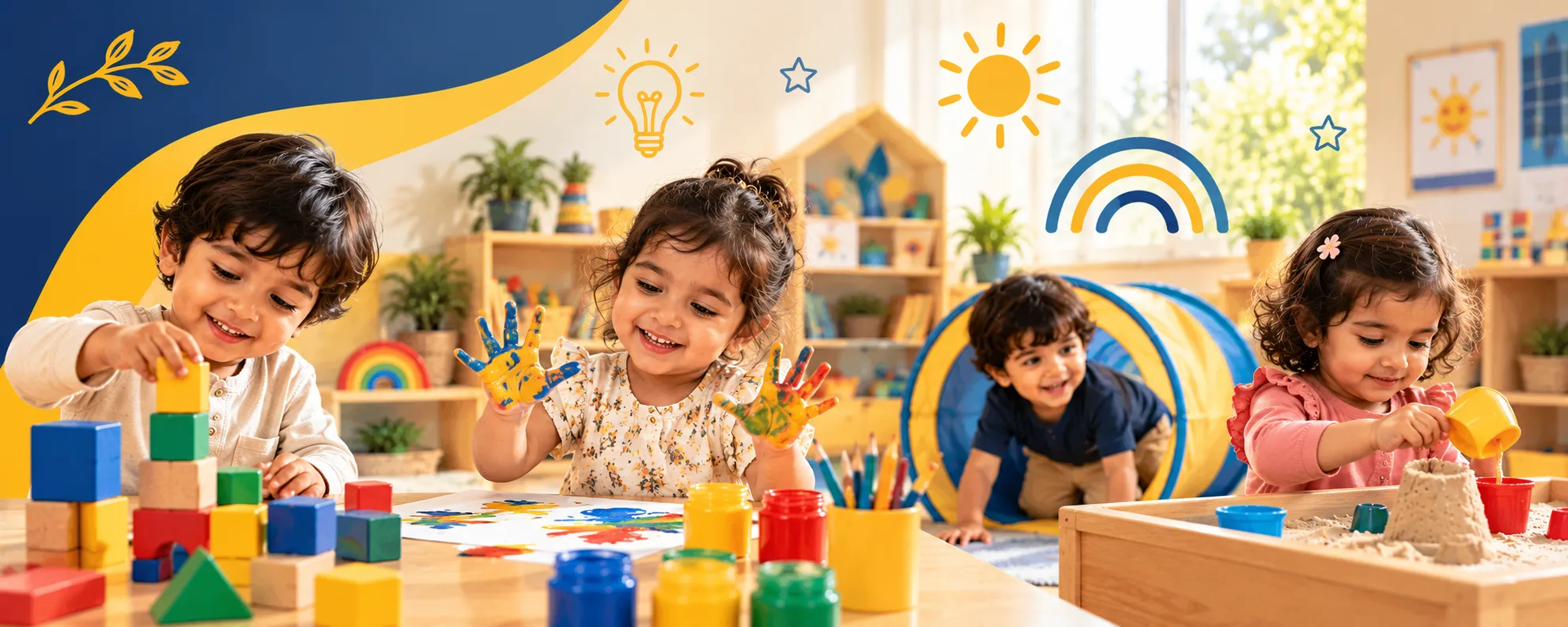
Wondering about the right age to start playgroup? There is no single age that works for every child. While many children begin playgroup between 18 months and 2.5 years, developmental readiness, comfort with separation, communication, social interest and the ability to manage simple routines can be more useful indicators than age alone.
Ask ten parents when to start a playgroup, and you will get ten different answers - 18 months, two years, or "whenever they're ready." The reality is that there is no single magic age. A child's developmental readiness offers far better guidance than the date on a birth certificate.
For parents deciding when their toddler should start playgroup, the key question is not simply “How old is my child?” but “Is my child ready for a group learning environment?”
Why Age Isn't the Best Indicator
Two children born in the same month can be ready for group settings at completely different times. One toddler might thrive in a room full of peers at 18 months, while another benefits from waiting until closer to three.
Chronological age provides a general benchmark, but social, emotional, and physical readiness are what truly determine a smooth, positive transition.
Age can therefore provide a starting point, but it should be considered alongside your child's individual development and the age requirements of the playgroup or preschool programme you are considering.
5 Signs Your Child Is Ready
Rather than watching the calendar, observe your child's everyday behaviors for these five key readiness indicators:
- Separation Tolerance: They can manage short stretches away from primary caregivers with familiar adults or in safe environments without prolonged distress.
- Basic Communication: They can point, gesture, or use simple words and sounds to signal basic needs like hunger, thirst, or discomfort.
- Interest in Peers: They actively watch, approach, or attempt to interact with other children during park visits or family gatherings.
- Physical Independence: They can walk, sit comfortably for short group activities, and manage simple self-help tasks like holding a cup.
- Tolerance for Routine: They can follow a simple, repeated sequence of daily events (like snack time followed by outdoor play) without feeling overwhelmed.
These signs are helpful indicators of readiness, not a checklist that every child must complete before starting playgroup. Children develop at different rates, and educators can often support children as they adjust to a new environment.
Early Start vs. Waiting: Weighing Your Options
The Case for Starting Early (18 to 24 Months)
For many toddlers, an early start provides low-stakes, playful exposure to social interactions. It allows them to practice sharing, turn-taking, and short periods of separation at an age when social expectations are gentle, forgiving, and focused entirely on play.
Starting playgroup at this age may be appropriate when a child is comfortable with short separations and the programme is specifically designed for younger toddlers. The quality and structure of the environment are important considerations.
The Case for Waiting (2.5 to 3 Years)
Some children thrive with extra time at home to build stronger language skills, enjoy one-on-one attention, and gain emotional security before joining a group setting. A confident three-year-old often adjusts quickly and eagerly to a new classroom environment.
Waiting can also give some children more time to develop communication, independence and comfort with routines. There is no developmental advantage in rushing a child into playgroup before they are ready.
What Matters Most: Environment and Adjustment
The right age matters far less than the environment you choose and how the transition is handled. A successful playgroup experience relies on:
- A Gradual Settlement Process: Allowing time for gentle drop-offs so your child builds trust with new educators.
- Responsive Teachers: Early childhood educators who read subtle cues and adjust to each child's emotional needs.
- Patience at Home: Giving your child a few wobbly weeks to adjust to new routines without pressure.
When choosing a playgroup, parents should also look at the educator-to-child interaction, safety, classroom environment, daily routine, opportunities for play and exploration, and how the school supports settling-in and separation.
There is no single "correct" week to enroll your child in playgroup. Focus on observing your child's unique developmental cues rather than strictly following the calendar, and the timing will naturally align.
If you are exploring early childhood programmes for your child, discover MLSI’s preschool programme to learn more about age-appropriate learning and early childhood development.
The right age matters, but the right environment matters even more
FAQs
There is no single right age to start playgroup, but many children begin between 18 months and 2.5 years. The best time depends on the child's developmental readiness, comfort with separation, communication, interest in peers and ability to manage simple routines, as well as the programme's age requirements.
Your child may be ready to start playgroup when they can manage short periods away from a primary caregiver, communicate basic needs, show interest in other children and participate in simple routines. Age is a useful guideline, but individual readiness should also be considered.
The best age for playgroup varies between children. Many playgroups cater to toddlers from around 18 months onwards, while some programmes begin later. Parents should consider both their child's developmental readiness and the specific age eligibility of the programme.
Signs of playgroup readiness can include managing short separations, communicating basic needs, showing curiosity about other children, moving independently and adapting to simple routines. These are general indicators rather than strict requirements, as children develop at different rates.
Yes, some 18-month-olds can be ready for a playgroup designed specifically for young toddlers. The child's comfort with separation, communication, mobility and the programme's approach should be considered before enrolment.
Yes. Two years is a common age for beginning playgroup, provided the child is developmentally ready and meets the programme's age requirements. A playgroup at this stage can provide opportunities for social interaction, play, exploration and gradually becoming comfortable with routines outside the home.
Not necessarily. A child does not need to wait until age three if they are already comfortable with short separations and group experiences. Conversely, a child who needs more time to adjust may benefit from starting later.
Playgroup can give young children opportunities to socialise, communicate, explore new environments, practise simple routines, develop independence and become comfortable interacting with educators and peers. The experience can also provide a gentle transition towards more structured early childhood education.
Parents should consider the age suitability of the programme, educator-child interactions, safety, classroom environment, group size, daily routine, play opportunities and approach to settling and separation. Visiting the setting and observing how educators respond to children can help parents make a more informed decision.
Some children experience separation distress when starting a new setting, and this can be part of the adjustment process. A gradual settling approach, consistent routines, responsive educators and calm reassurance from parents can help children become more comfortable over time. If distress is persistent or significantly affects the child's wellbeing, parents should discuss their concerns with the educators and, where appropriate, a qualified professional.