What Is Scaffolding in Education and How Teachers Support Students

What Is Scaffolding in Education and How Teachers Support Students
Blog7 August 20266 min read

Scaffolding in education is a teaching approach in which teachers provide temporary, targeted support to help students understand new concepts, develop skills and complete challenging tasks. As learners become more confident and capable, the support is gradually reduced so they can work independently.


Every child learns differently. Some students quickly grasp new concepts, while others need additional guidance and support to build understanding. Effective teaching recognises these differences and provides learners with the right level of assistance to help them succeed. One of the most effective approaches used by educators worldwide is known as scaffolding in education.


Educational scaffolding helps bridge the gap between what a student can do independently and what they can achieve with appropriate guidance. It can be used across subjects, age groups and learning needs, making it an important strategy for differentiated and inclusive teaching.


In International Baccalaureate (IB) schools, scaffolding is an essential teaching strategy that helps students develop confidence, independence, and deeper understanding while progressing at their own pace.


What Is Scaffolding in Education?


Scaffolding in education refers to the temporary support teachers provide to help students learn new concepts or skills. Just as scaffolding supports workers while constructing a building, educational scaffolding supports learners as they build knowledge and understanding.


As students gain confidence and competence, the support is gradually removed, allowing them to work independently.


This gradual release of support is central to effective scaffolding: teachers provide more guidance when a concept is new and progressively transfer responsibility to the learner as understanding develops.


The concept is based on psychologist Lev Vygotsky's theory of the Zone of Proximal Development (ZPD), which suggests that students learn best when guided through tasks that are slightly beyond their current abilities.


What Scaffolding in Education Is Not

Scaffolding does not mean giving students the answers or making challenging work easier. Instead, it provides temporary support that helps learners develop the knowledge, strategies and confidence needed to solve problems independently. Effective scaffolding is gradually removed as students become more capable.


How Does Scaffolding Work in the Classroom?


Teachers use a variety of strategies to scaffold learning. These may include:

  • Breaking complex tasks into smaller steps
  • Using visual aids and graphic organisers
  • Providing examples and models
  • Asking guiding questions
  • Offering sentence starters and writing frameworks
  • Encouraging peer collaboration
  • Providing timely feedback
  • Activating prior knowledge
  • Chunking information into manageable steps
  • Think-aloud demonstrations
  • Concept maps and graphic organisers
  • Worked examples followed by independent practice
  • Formative assessment to identify learning gaps
  • Gradual release of responsibility


The most effective scaffolding is responsive rather than fixed. Teachers observe how students are progressing and adjust the level of support accordingly. As students demonstrate greater understanding, prompts and guidance are reduced to encourage independence and student agency.


These strategies help students engage with challenging concepts without feeling overwhelmed.


Examples of Scaffolding in the Classroom

A teacher might model how to solve a problem before asking students to try a similar example independently. In a writing task, the teacher could provide a structure, vocabulary prompts or sentence starters before gradually removing these supports. During inquiry-based learning, guiding questions can help students develop their own questions and investigate increasingly complex ideas.


Scaffolding in the IB Classroom


The IB philosophy emphasises inquiry-based learning, critical thinking, and student agency. Scaffolding complements the IB's focus on inquiry, conceptual understanding, student agency and Approaches to Learning (ATL) skills. Rather than providing a fixed set of instructions, teachers can use targeted support to help students develop the skills needed to inquire, communicate, think critically, collaborate and reflect independently.

While students are encouraged to take ownership of their learning, teachers play a vital role in providing support throughout the learning journey.

In the Primary Years Programme (PYP), teachers may use visual thinking routines, guided inquiry questions, and collaborative discussions to support young learners.

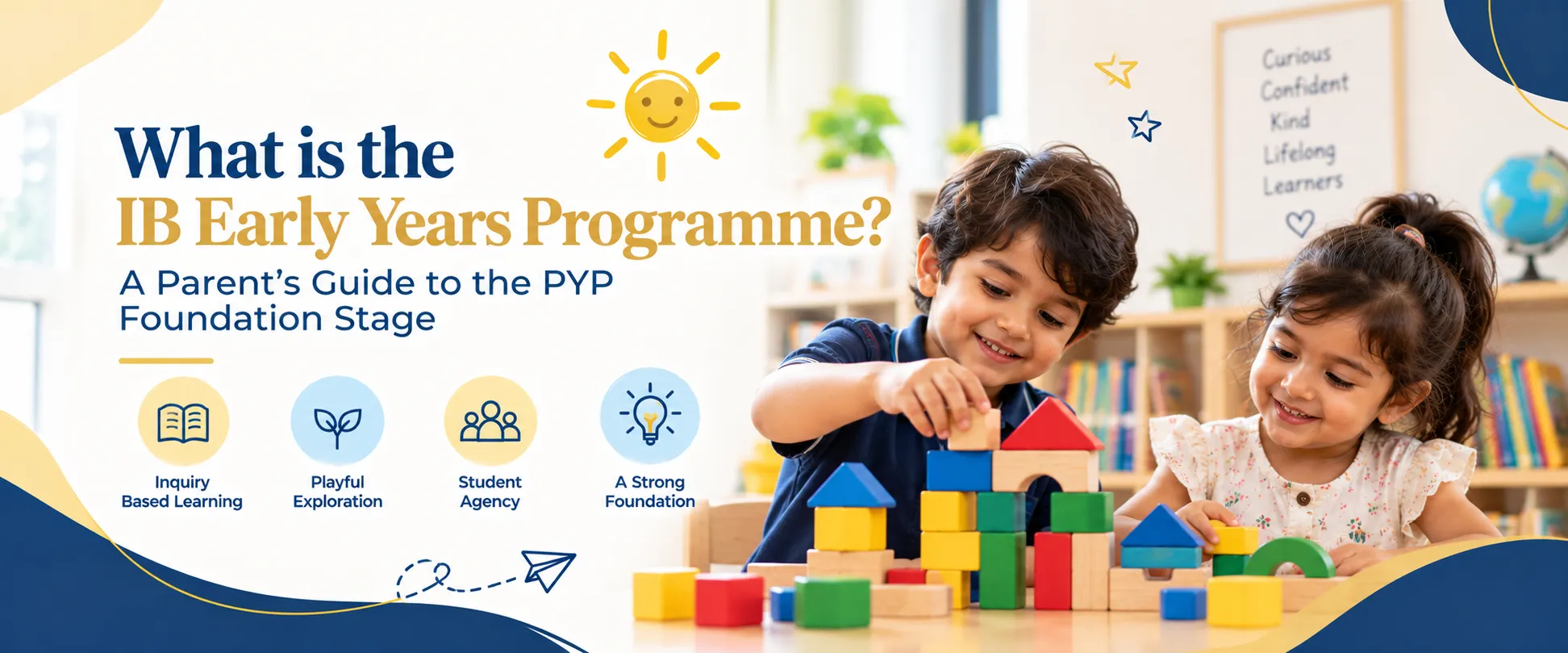
In the PYP, scaffolding can help younger learners develop confidence as they explore concepts through inquiry, discussion, visual tools and hands-on experiences.


In the Middle Years Programme (MYP), scaffolding may include research frameworks, planning templates, and structured reflection activities that help students organise their thinking.

In the MYP, scaffolding can support increasingly complex research, interdisciplinary learning, communication and reflection while encouraging students to take greater ownership of the learning process.


In the Diploma Programme (DP), teachers provide guidance on research skills, academic writing, and project planning while gradually encouraging students to work independently.

In the DP, scaffolding can support academic research, critical thinking, academic writing, time management and independent inquiry while maintaining the programme's academic rigour.


How Scaffolding Supports Differentiated Learning


Scaffolding is closely connected to differentiated instruction because both approaches recognise that students may need different types or levels of support to access challenging learning. A teacher might provide additional modelling for one learner, a visual organiser for another, or an extension challenge for a student who is ready to work more independently.


The goal is not to lower expectations. It is to provide appropriate pathways that help every learner work towards meaningful learning goals.


Benefits of Scaffolding


Scaffolding offers numerous benefits for learners:


Builds Confidence

Students feel more capable when they receive appropriate support and experience success in challenging tasks.


Encourages Independence

As support is gradually removed, learners become more self-directed and responsible for their own learning.


Promotes Deeper Understanding

Rather than memorising information, students actively engage with concepts and develop meaningful understanding.


Supports Diverse Learners

Scaffolding ensures that all students, regardless of their learning needs or abilities, can access the curriculum successfully.


Develops Critical Thinking

Scaffolding gives students structured opportunities to analyse information, make connections, evaluate ideas and solve problems before gradually taking greater ownership of the thinking process.


Strengthens Metacognition

When teachers encourage students to explain how they approached a task, reflect on mistakes and identify strategies that worked, scaffolding also develops metacognitive skills and learner independence.


Supports Student Agency

As support is gradually reduced, students make more decisions about how they learn, solve problems and demonstrate understanding. This transition from supported learning to independent learning strengthens student agency.


Examples of Scaffolding Across Subjects

Scaffolding in Mathematics

Teachers can model a problem-solving strategy, provide worked examples, use visual representations and then gradually remove these supports as students become more confident.


Scaffolding in Language and Writing

Sentence starters, vocabulary banks, writing frameworks, exemplars and teacher modelling can help students organise their ideas before they begin writing independently.


Scaffolding in Science

Teachers can use diagrams, demonstrations, guiding questions and structured investigation templates to help students develop scientific reasoning and gradually design more independent investigations.


Scaffolding in Inquiry-Based Learning

Guiding questions, concept maps, curated resources and reflection prompts can help students navigate an inquiry while still allowing them to make meaningful choices and develop their own questions.


Preparing Learners for the Future


Today's learners need more than content knowledge. They need problem-solving skills, resilience, communication abilities, and confidence to navigate an ever-changing world.


Through effective scaffolding, IB teachers help students develop these essential skills while fostering a growth mindset and a love for learning.


Because effective scaffolding is gradually removed, students learn an important lesson: support is not a substitute for independence. It is a pathway towards becoming a confident, self-directed learner.


At Mount Litera school International (MLSI), scaffolding is thoughtfully integrated into classroom practice to ensure every learner feels supported, challenged, and empowered to reach their full potential. By providing the right support at the right time, educators create learning experiences that inspire success and lifelong learning.


Whether a student is learning a new mathematical concept, developing a research question or writing an extended piece of work, the right support at the right time can make challenging learning feel achievable. In an IB classroom, scaffolding helps teachers balance academic rigour with inclusion, student agency and independence—giving every learner the opportunity to progress, reflect and thrive.


Key Takeaways

  • Scaffolding is temporary support that helps students become independent learners.
  • It is based on the idea of supporting learning within the Zone of Proximal Development.
  • Common strategies include modelling, questioning, visual aids, examples and guided practice.
  • IB teachers use scaffolding to support inquiry, conceptual understanding and student agency.
  • Scaffolding can be used across the PYP, MYP and DP.
  • Effective scaffolding supports diverse learners without lowering academic expectations.
  • The ultimate goal is independent, confident and self-directed learning.


References

Vygotsky, L. S. (1978). Mind in Society: The Development of Higher Psychological Processes. Cambridge, MA: Harvard University Press.

International Baccalaureate Organization. (2019). Learning diversity and inclusion in IB programmes. International Baccalaureate Organization. Retrieved from ibo.org

International Baccalaureate Organization. (2022). Approaches to learning in IB programmes. International Baccalaureate Organization. Retrieved from ibo.org

Bruner, J. S. (1986). Actual Minds, Possible Worlds. Cambridge, MA: Harvard University Press.

Tomlinson, C. A. (2017). How to Differentiate Instruction in Academically Diverse Classrooms (3rd ed.). Alexandria, VA: ASCD

Let Your Child's Journey Begin at MLSI

Join one of the top IB schools in Mumbai. Experience world-class education that shapes global citizens.

Contact Us