Experiential Learning Explained: How IB Schools Prepare Students for the Future

Blog10 July 20266 min read

Experiential learning is a student-centred approach that helps learners develop knowledge, skills, and understanding through real-world experiences, inquiry, reflection, and meaningful action. In International Baccalaureate (IB) schools, experiential learning encourages students to apply classroom concepts to authentic situations, preparing them for academic success, lifelong learning, and an ever-changing world.


In today's rapidly changing world, education must go beyond textbooks and memorization. Students need opportunities to apply their learning, think critically, solve real-world problems, and develop the skills necessary to thrive in an interconnected global society.


Modern education is increasingly focused on developing critical thinking, creativity, collaboration, communication, and problem-solving skills alongside academic knowledge. Experiential learning provides students with opportunities to build these essential competencies through active participation rather than passive learning.


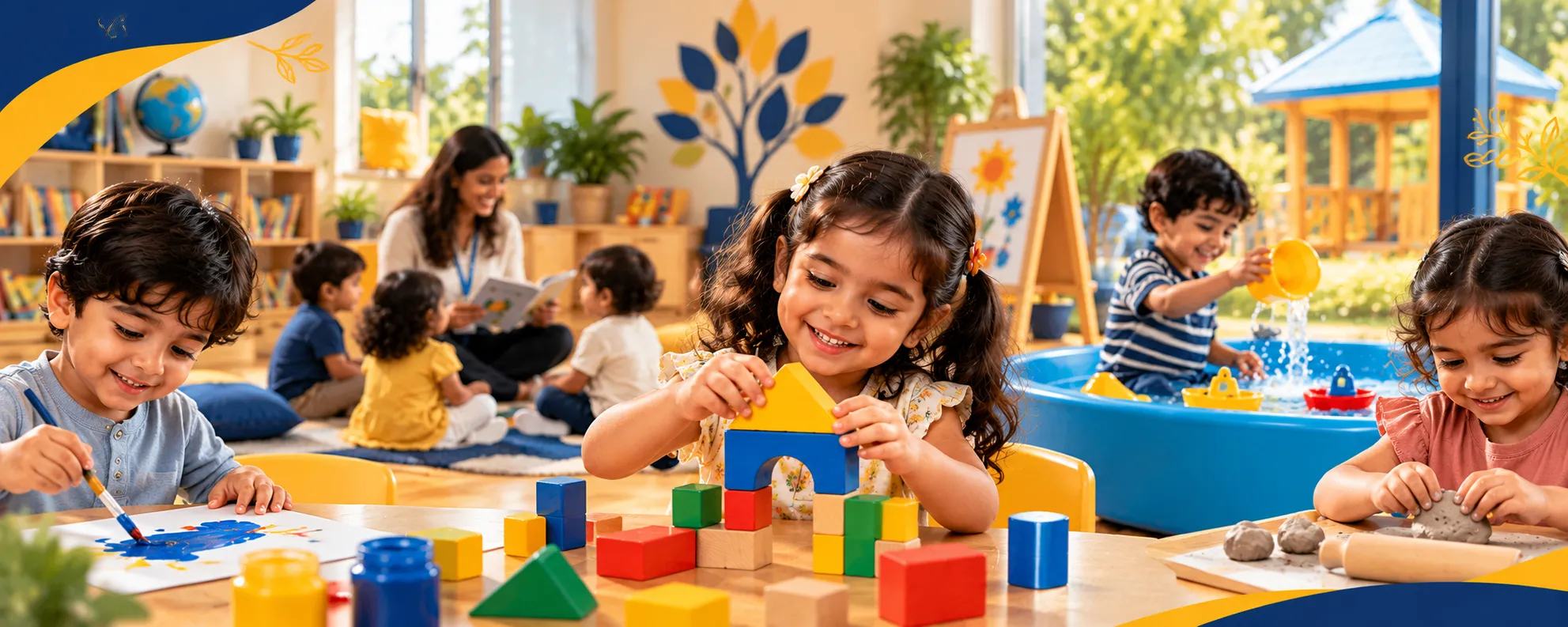
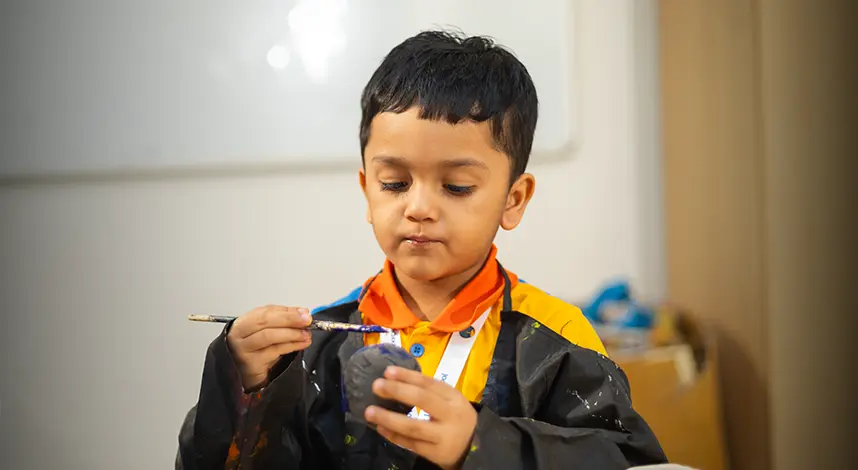
Experiential learning is a process through which students learn by doing, reflecting, and applying their knowledge in meaningful contexts. Rather than simply receiving information, learners actively engage with concepts, explore ideas, ask questions, and make connections between classroom learning and real-life experiences.


Research consistently shows that students retain knowledge more effectively when they actively explore, experience, reflect, and apply what they have learned in meaningful contexts.


Learning Beyond the Classroom Through Experiential Learning


The International Baccalaureate (IB) places experiential learning at the heart of its educational philosophy. Across all IB programmes, students are encouraged to become active participants in their learning journey. Inquiry-based learning, collaboration, reflection, and authentic experiences form the foundation of the IB approach, helping students become curious, independent, and internationally minded learners. They investigate authentic problems, collaborate with others, reflect on their experiences, and take meaningful action based on their understanding.


Whether it is conducting scientific investigations, participating in community service projects, creating entrepreneurial ventures, engaging in Model United Nations conferences, or exploring local and global issues, IB students learn by experiencing concepts firsthand.


These real-world learning opportunities encourage students to connect academic knowledge with everyday life while developing confidence, resilience, and practical problem-solving skills.


How IB Schools Bring Concepts to Life


One of the unique strengths of the IB framework is its concept-based approach to learning. Rather than focusing solely on facts, students explore big ideas such as change, systems, relationships, perspective, and responsibility.


Concept-based learning enables students to transfer their understanding across different subjects and apply knowledge in unfamiliar situations rather than simply memorising isolated facts.


For example:


  • A science lesson on sustainability may involve students designing solutions to reduce waste in their community.
  • A mathematics unit on financial literacy may culminate in a student-led market day where learners apply budgeting, pricing, and profit-loss concepts.
  • A social studies inquiry may encourage students to investigate global challenges and propose actionable solutions.
  • Language learning may be enhanced through interviews, debates, storytelling, and real-world communication experiences.


By exploring authentic challenges through multiple disciplines, students develop deeper conceptual understanding and become more engaged in their own learning.


These opportunities help students understand not just what they are learning, but why it matters.


Experiential Learning Develops Future-Ready Skills


Experiential learning fosters essential skills that are highly valued in universities and workplaces. Through hands-on learning experiences, students develop:


  • Critical and creative thinking
  • Communication and collaboration skills
  • Leadership and teamwork
  • Problem-solving abilities
  • Resilience and adaptability
  • Self-management and reflection
  • Global awareness and empathy


These transferable skills are increasingly recognised by universities, employers, and global organisations as essential for success in higher education, future careers, and responsible citizenship.


Students learn to navigate challenges, take risks, learn from mistakes, and become confident, independent learners.


Experiential learning also strengthens adaptability, innovation, decision-making, and lifelong learning habits that prepare students for an evolving global landscape.


Service Learning Builds Responsible Global Citizens


An important aspect of experiential learning in IB schools is service learning. Students engage in meaningful projects that address real community needs while developing a deeper understanding of social responsibility.


Service learning allows students to combine academic learning with meaningful community engagement, developing empathy, ethical leadership, and a genuine commitment to creating positive social impact.


Whether organizing donation drives, promoting environmental sustainability, supporting literacy initiatives, or advocating for social causes, learners connect academic knowledge with purposeful action. These experiences nurture compassionate and responsible global citizens who understand that they have the power to make a positive difference.


Student Agency: Empowering Independent Learners


Experiential learning empowers students to take ownership of their learning. They make choices, set goals, ask questions, and pursue inquiries that matter to them. This sense of agency increases engagement, motivation, and curiosity while helping students develop confidence in their abilities.


When students have a voice and choice in their learning, they become more motivated, self-directed, and capable of taking responsibility for their own educational journey.


By actively participating in the learning process, students become more invested in their growth and develop a lifelong love for learning.


Preparing Students for Life Beyond the Classroom


At its core, experiential learning is about preparing students not just for examinations, but for life. It enables learners to transfer knowledge across disciplines, adapt to new situations, and approach challenges with creativity and confidence.


These experiences help learners become adaptable thinkers who are prepared to solve complex problems, embrace innovation, and contribute positively to an increasingly interconnected world.


In IB schools, learning is not confined to the classroom. It comes alive through inquiry, action, reflection, collaboration, and authentic experiences that help students connect learning to the world around them.


This holistic approach develops both academic excellence and essential life skills, ensuring students are equipped to thrive beyond the classroom.


As educators, our goal is to create opportunities where students do not simply learn concepts—they experience them, understand them, and use them to make meaningful contributions to society. Through experiential learning, we empower young people to become knowledgeable, caring, and capable individuals who are ready to shape the future.


Experiential learning ensures that education is not only meaningful today but also relevant for the challenges and opportunities of tomorrow.


Frequently Asked Questions


What is experiential learning?

Experiential learning is a teaching approach where students learn by actively engaging in meaningful experiences, reflecting on those experiences, and applying their understanding in new situations. Rather than simply memorising information, learners investigate questions, solve authentic problems, collaborate with others, and make connections between classroom learning and the real world.


In an IB school, experiential learning is embedded throughout the curriculum. Students develop conceptual understanding through inquiry, exploration, action, and reflection, helping them become knowledgeable, confident, and lifelong learners who can transfer their learning beyond the classroom.


Why is experiential learning important?

Experiential learning is important because it helps students develop a deeper understanding of concepts while building the skills they need for life beyond school. When learners actively participate in their education, they are more likely to retain knowledge, think critically, communicate effectively, and solve complex problems.


Within the International Baccalaureate, experiential learning also nurtures the attributes of the IB Learner Profile, encouraging students to become inquirers, thinkers, communicators, principled individuals, and reflective learners. These qualities prepare students to thrive academically while becoming responsible global citizens.


How do IB schools use experiential learning?

IB schools integrate experiential learning across all stages of the curriculum through inquiry-based learning, collaborative projects, investigations, service learning, fieldwork, interdisciplinary experiences, and authentic real-world challenges.


Students might design sustainable solutions during a Science unit, conduct interviews in Language and Literature, participate in Model United Nations, develop entrepreneurial projects, or engage in meaningful community service. Throughout these experiences, learners inquire, reflect, take action, and apply their knowledge in ways that make learning purposeful and relevant.


This approach transforms students from passive recipients of information into active participants in their own learning journey.


What is the difference between experiential learning and traditional learning?

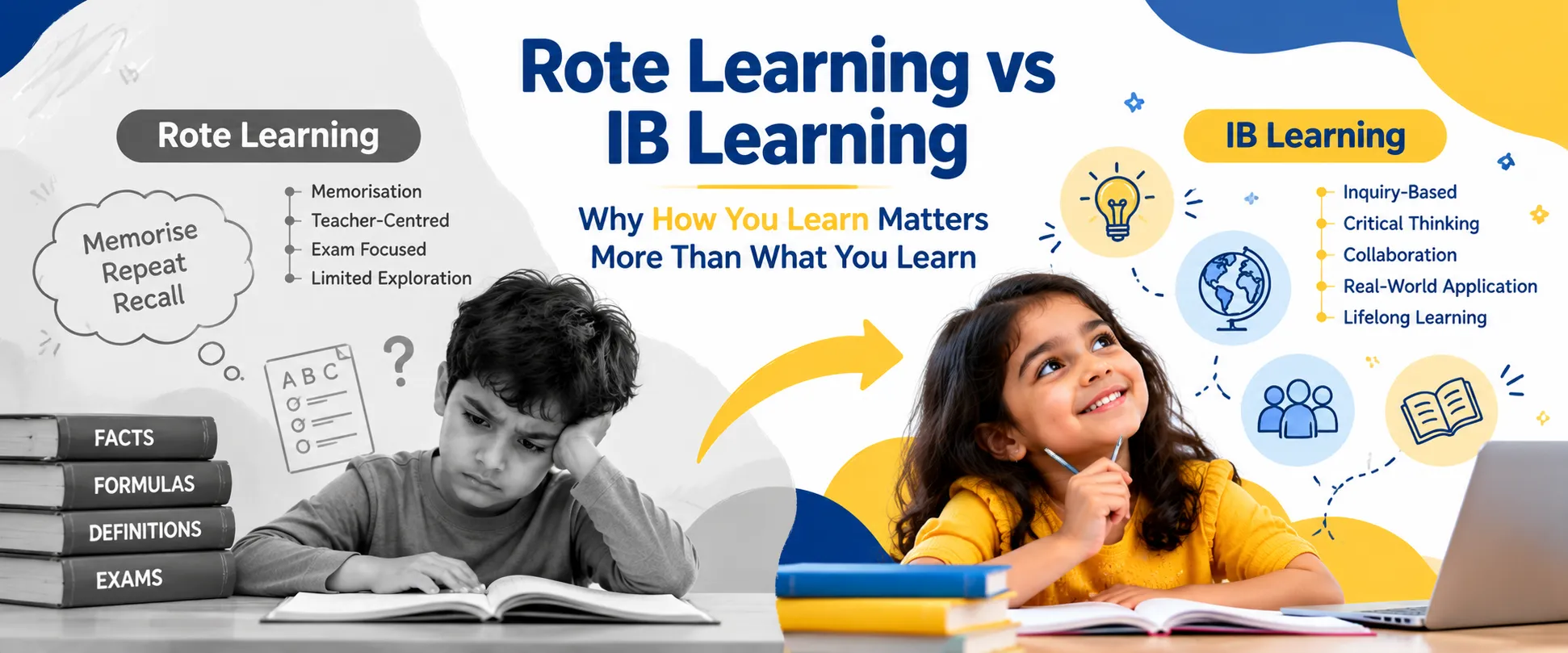
Traditional learning often focuses on acquiring knowledge through teacher-led instruction, textbooks, and memorisation. Experiential learning places students at the centre of the learning process by encouraging them to investigate, question, collaborate, experiment, and reflect.


In an IB classroom, students are encouraged to explore concepts rather than memorise facts. They develop conceptual understanding by applying their knowledge to authentic situations, making interdisciplinary connections, and reflecting on their learning. This approach helps students understand not only what they are learning but also why it matters and how it can be applied in different contexts.


What are examples of experiential learning in schools?

Experiential learning can take many forms depending on the age of the students and the learning objectives. Common examples include scientific investigations, design challenges, outdoor learning, field visits, entrepreneurship projects, debates, community service initiatives, collaborative research, simulations, and creative performances.


Within the IB curriculum, experiential learning is often seen through inquiry units, transdisciplinary projects, Service as Action, the Creativity, Activity, Service (CAS) programme in the Diploma Programme, personal investigations, exhibitions, and interdisciplinary learning experiences. These activities encourage students to apply their learning while developing independence, creativity, and responsibility.


How does experiential learning improve student outcomes?

Experiential learning improves student outcomes by helping learners develop a deeper understanding of concepts and stronger transferable skills. Students are more likely to remember what they have learned when they actively investigate, discuss, create, and reflect on their experiences.


Research consistently shows that active learning improves engagement, motivation, critical thinking, communication, collaboration, and problem-solving. In IB schools, these experiences also strengthen student agency, encouraging learners to become self-directed, reflective, and confident individuals who are prepared for higher education and lifelong learning.


What skills do students develop through experiential learning?

Experiential learning helps students develop a broad range of academic, personal, and interpersonal skills. Alongside conceptual understanding, learners strengthen critical thinking, creativity, communication, collaboration, leadership, research, self-management, and problem-solving.


Within the IB framework, experiential learning also supports the development of the Approaches to Learning (ATL) Skills, including thinking skills, communication skills, social skills, research skills, and self-management skills. These transferable competencies enable students to adapt to new challenges, work effectively with others, and become independent learners in an increasingly complex world.


Why is experiential learning important for the future?

Experiential learning prepares students for a future where adaptability, innovation, collaboration, and critical thinking are just as important as academic knowledge. As industries and careers continue to evolve, young people need the confidence to apply what they know in unfamiliar situations and solve real-world problems creatively.


The International Baccalaureate recognises that education should prepare students not only for examinations but also for life. Through inquiry, action, reflection, and authentic learning experiences, students develop the knowledge, skills, attitudes, and values needed to become compassionate leaders, responsible global citizens, and lifelong learners who can make a meaningful contribution to an ever-changing world.


Let Your Child's Journey Begin at MLSI

Join one of the top IB schools in Mumbai. Experience world-class education that shapes global citizens.

Contact Us